
To evaluate connector suppliers for long-term production stability, assess manufacturing capacity and process control, material and plating consistency across lots, documentation and change discipline, delivery and capacity communication, and technical support quality—not unit price alone. Stability is a system outcome: tooling wear, plating queues, packaging integrity, and ECO handling all affect whether approved samples still represent what ships a year later. Build a scorecard that quality, engineering, and purchasing can share.
Manufacturing Capacity And Process Control
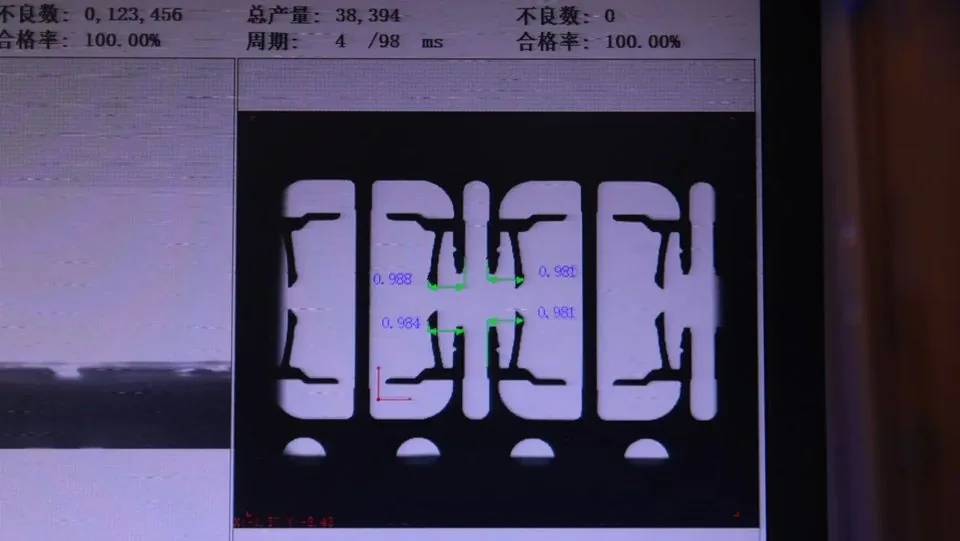
Confirm that the supplier can run your pitch family at the volumes and mix you forecast. Ask how critical dimensions are measured in production, how often capability is rechecked after mold or stamping maintenance, and how outgoing inspection is sampled. Fine-pitch board-to-board work is sensitive to coplanarity and true position drift; capacity without metrology is not stability.
Review factory practices summarized on the manufacturing quality page and walk the same questions for the series you intend to buy—whether 0.4 mm pitch board-to-board connectors for consumer electronics, 0.5 mm pitch automotive board-to-board connectors, or floating board-to-board connectors. Catalog orientation (per catalog) such as 0.4 mm mated heights 1.5–4.0 mm / 0.3 A, or 0.5 mm heights 3.0–5.0 mm / 0.5 A, only helps if process control can hold those geometries lot after lot.
Material, Plating, And Lot Consistency
Long-term stability fails when terminals, resins, or plating baths change without notice. Require that plating callouts and housing grades on the PO match the approved drawing revision. Ask how lot traceability is maintained from terminal stamping through plating and reel packaging. For hybrid floating parts with listed 3.0 A power pins (per catalog), confirm power and signal contacts follow the same revision discipline.
When cable assemblies or LVDS connectors are in scope, extend consistency checks to cable construction, shield termination, and electrical sampling criteria—not only the board-side housing.
Documentation, Samples, And Change Discipline
Stable suppliers treat drawings, STEP files, and test summaries as controlled objects. Incomplete documentation is a frequent cause of footprint and stacking errors; use the framework in what technical drawings and test data matter most before connector procurement. Sample and mass-production gates should be explicit: inspection criteria in what buyers should check before approving connector samples, and process release in how to approve connector samples for mass production.
Ask for a written change-notice path covering material, tooling, plating, packaging, and sub-tier shifts. Silent substitutions are incompatible with long-term production stability.
Delivery Reliability And Capacity Communication
Evaluate how the supplier communicates stage status (confirmation, materials, samples, validation, batch)—not only a single ship date. Custom paths especially need stage transparency, as explained in real lead time for custom connector and cable assembly orders. Share forecast bands so plating and molding capacity can be planned; surprise spikes stress even capable lines.
Do not rely on informal day-count promises. Capture included stages and customer-action dependencies in the RFQ response.
Technical Support And Communication Habits
Stable partnerships show up in response quality: drawing feedback, deviation lists, retained-sample discipline, and clear owners for ECOs. Prefer suppliers who ask clarifying questions about stack height, vibration, and process before quoting a look-alike PN. Proactive communication beats reactive fire drills when a pilot yield issue appears.
Supplier Stability Scorecard
| Evaluation area | What to request | Stability signal |
|---|---|---|
| Capacity & metrology | Process/inspection overview | Critical dims controlled in production |
| Materials & plating | Revision-matched callouts | Traceability across lots |
| Documentation | Controlled drawings + reports | Revisions align across PDF/STEP |
| Change control | Written notice path | No silent substitutions |
| Delivery communication | Stage-gate status | Forecast used for capacity |
| Support quality | Named engineering contact | Clear ECO impact statements |
Practical Audit Checklist
[ ] Series capability matches pitch/height/pin needs (per catalog + drawing)
[ ] IQC/OQC methods explained for fine-pitch critical dims
[ ] Plating and packaging locked to approved revision
[ ] Sample vs production-intent path understood
[ ] Change-notice owners named
[ ] Forecast and ramp communication agreed
[ ] Dual-source differences documented if applicable
[ ] Cable/LVDS workmanship criteria included when relevant
Red Flags Versus Green Flags
Red flags include: quotes without drawing revision references, “compatible” claims based on pitch alone, refusal to discuss change control, and status updates that only say “on track.” Green flags include revision-matched packages, stage-based schedules, retained-sample discipline, and willingness to separate design samples from production-intent lots.
Selection habits that reduce late surprises are also covered in what buyers should check before choosing a high precision connector. Fine-pitch risk awareness belongs in the same evaluation: common risks when sourcing fine-pitch connectors.
Tie Supplier Evaluation To The Product Family You Will Buy
A supplier may be strong on one pitch family and weaker on another. Score the specific processes behind 0.4 mm consumer stacks, 0.5 mm multi-board designs, floating hybrids, or LVDS cable sets rather than issuing a single generic “approved vendor” stamp. Ask for examples of retained inspection data and how often critical dimensions are rechecked after tool maintenance for the family you care about.
If your roadmap includes both rigid BTB and high-speed cable interfaces, evaluate whether engineering support can read mixed drawing packages and return documented deviations before tooling decisions. Stability is harder when interconnect types multiply but communication owners stay unclear.
FAQ
Is ISO paperwork enough to prove production stability?
Certificates can be part of a file, but buyers still need process evidence for the pitch families they purchase—metrology, plating control, and change notices matter more than logos on a wall.
How often should suppliers be re-qualified?
Re-check after major tooling or plating changes, after repeated quality escapes, and on a periodic cadence defined by your quality system. Tie re-qualification to risk, not only calendar habit.
What forecast detail helps stability without over-committing?
Monthly or quarterly volume bands by family, plus known mix of heights/pin counts. Exact PO dates alone do not help plating planning.
Should price be in the stability scorecard?
Commercial terms matter, but optimizing unit price while ignoring change control and yield usually raises total cost. Score stability and commercial factors separately.
How do floating or hybrid parts change supplier questions?
Ask how float mechanisms and power-pin geometries are controlled in production and how revisions are validated—especially when modules are designed for automotive applications.
Request A Quote
Share target series or PNs, annual volume bands, documentation expectations, and change-control requirements. Weicheng can respond with controlled drawings, sample options, and process information for supplier evaluation. Contact https://www.wcjmconnect.com/contact.