
The most common risks when sourcing fine pitch or miniature connectors are dimensional deviation (mating and solder yield loss), unstable contact/plating performance (intermittent signal), and weak process compatibility (handling and reflow damage). Because pitch and structure are compact, variation that would be acceptable on a larger connector can become a line-stopper in volume. Buyers should treat these parts as high-sensitivity components and review tolerance, plating, and assembly capability together.
Dimensional Deviation And Mating Failure
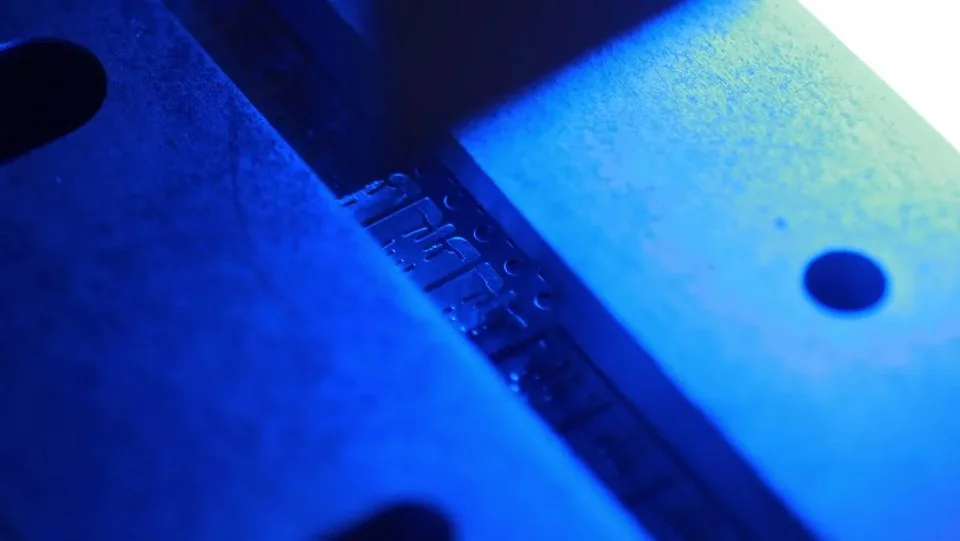
Fine pitch leaves little margin for pin location error, housing warp, or coplanarity drift. Typical failure modes include:
Difficult or false mating
Bent terminals during first engagement
Open or high-resistance solder joints after reflow
Rising DPMO as pitch decreases
Procurement actions: require capability evidence for critical dimensions, define incoming inspection points, and protect parts with proper packaging and handling rules from warehouse to SMT. For ultra-compact consumer stacks, study family options under 0.4 mm pitch board-to-board connectors for consumer electronics. For modules designed for automotive applications, compare 0.4 mm pitch automotive board-to-board connectors with the same dimensional discipline.
Catalog orientation (per catalog): 0.4 mm BTB themes list mated heights 1.5–4.0 mm and pin counts 30–70; keep height and pin map locked to the approved drawing, not to a “similar looking” sibling PN.
Contact Reliability, Plating, And Signal Stability
Miniature contacts concentrate force and current in small geometry. Risks include plating thickness variation, surface contamination, fretting under micro-motion, and contact resistance drift. In high-speed or differential paths, unstable contacts show up as bit errors or EMI sensitivity rather than hard opens.
Buyer focus areas:
Contact resistance stability over life, not only initial values
Plating type and thickness callouts matching the approved revision
Derating when multiple pins carry power or when ambient temperature is high
Hybrid designs when signal pitch cannot carry required current alone
Where USB interfaces sit next to fine-pitch BTB on the same board, apply the same plating and process scrutiny to USB Type-C connectors—mixed interconnect strategies often fail when one family is qualified carefully and the neighboring interface is not.
Assembly Handling And Process Compatibility
Even a dimensionally correct connector can fail if the assembly environment is not ready. Common process risks:
PCB fabrication tolerance stacking against connector true position
Incorrect stencil apertures causing solder bridging or opens
Excessive placement force or skewed nozzle contact
Manual touch-up on 0.4 mm pitch parts
Poor moisture or ESD control during kitting
Judge product and process together. Supplier process control and inspection depth are summarized on manufacturing quality. Upstream selection habits that reduce these risks are covered in what buyers should check before choosing a high precision connector. Practical pitch and stacking questions also appear in the board-to-board and LVDS connector FAQ.
Risk Comparison Table
| Risk category | Early symptom | Volume impact | Mitigation focus |
|---|---|---|---|
| Dimensional deviation | Hard mating, skewed seating | Scrap, rework, line stop | Tolerance capability + incoming dims |
| Plating / contact drift | Intermittent signal, rising CR | Field returns | Plating control + life data |
| Process mismatch | Bridging, tombstoning, bent pins | Yield collapse | Footprint, stencil, handling |
| Packaging / handling | Bent terminals before SMT | Hidden yield loss | Reel/tray integrity, ESD/MSL |
| Spec misread | Wrong height or pin map | ECO and tool delay | Drawing revision lock |
Practical Sourcing Checklist For Fine Pitch
[ ] Pitch, height, and pin count frozen against a named revision
[ ] Coplanarity and critical location dims on the IQC plan
[ ] Plating callout matches approved sample
[ ] Reflow profile and stencil design reviewed with process engineering
[ ] Pick-up cap or packaging method confirmed for automation
[ ] Current derating rules applied for grouped pins
[ ] Second-source geometry differences documented (not assumed identical)
[ ] Cable or shield interfaces nearby reviewed for EMI and mechanical clash
Second-Source And Look-Alike Pitfalls
Fine-pitch catalogs contain many parts that share pitch and pin count but differ in keying, solder-tail geometry, plating, or housing stiffness. Treating them as interchangeable based on a pitch label alone is a major sourcing risk. Require a side-by-side drawing diff before dual-sourcing, and run a process validation lot on each source—even if electrical ratings look identical on paper.
Storage and kitting risks are easy to underestimate. Bent terminals from poorly supported reels, moisture uptake in certain housings, and ESD events during manual handling can all present as “supplier quality” issues. Write handling instructions into the traveler so operators do not improvise. If a line uses both 0.4 mm and 0.5 mm parts, use clear visual management so reels are not swapped under time pressure.
Finally, plan scrap and rework strategy before ramping. Fine-pitch rework is slow and can damage pads. A controlled pilot that measures true first-pass yield under production fixtures is cheaper than discovering the gap after a customer build commitment.
FAQ
Why do fine-pitch connectors fail more often in mass production than in EVT?
EVT builds are often hand-nurtured. Volume exposes tolerance stack-up, plating lot variation, and process drift that small samples hide.
Is 0.5 mm always safer than 0.4 mm?
0.5 mm usually offers a wider process window, but the correct choice depends on space, pin count, and PCB capability. Do not default without a layout and yield review.
Can visual incoming inspection catch most risks?
No. Many dimensional and plating issues need gauges, microscopes, or electrical sampling. Visual checks catch bent pins and packaging damage only.
How should buyers handle “compatible” second sources?
Require full drawing comparison and process validation. Fine-pitch “look-alike” parts can differ in keying, plating, and coplanarity even when pitch matches.
What documents reduce fine-pitch sourcing risk the most?
Controlled mating + PCB drawings, plating specs, and process notes—then validate with a controlled pilot run before broad release.
Request A Quote
If you are qualifying 0.4 mm or other miniature interconnects, share pitch, height, pin count, PCB process notes, and annual volume. Weicheng can help align product selection with process reality. Submit your RFQ at https://www.wcjmconnect.com/contact.