
How To Choose Connectors For Industrial Control Equipment
Connectors used in industrial control equipment must support stable signal transmission, reliable power connection and long-term operation in demanding environments. Choosing the right connector helps reduce downtime, improve equipment reliability and ensure safe operation in automation systems.
Get Quote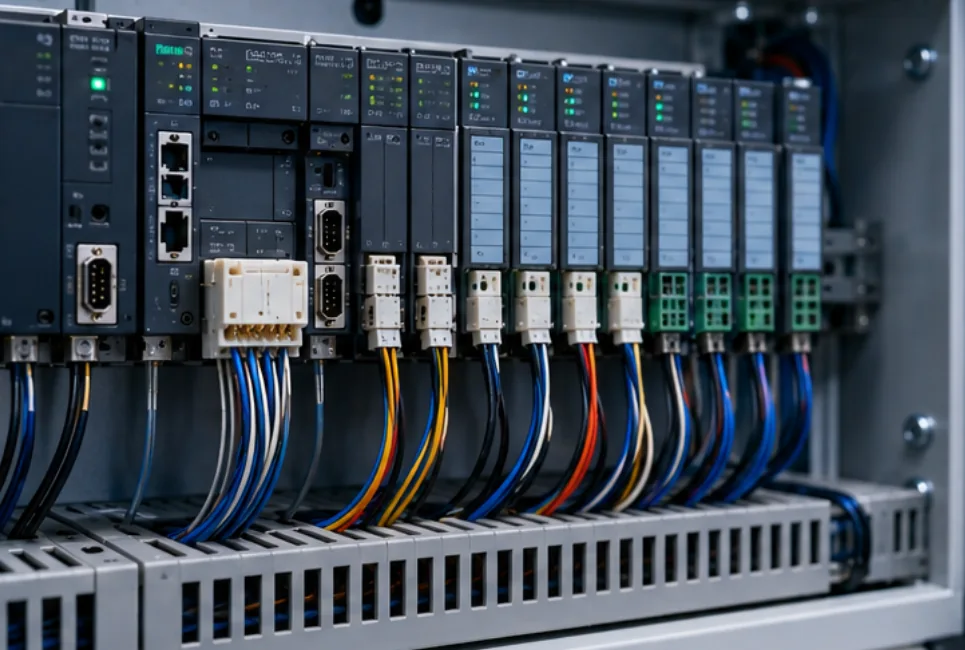
1. Confirm The Industrial Control Application
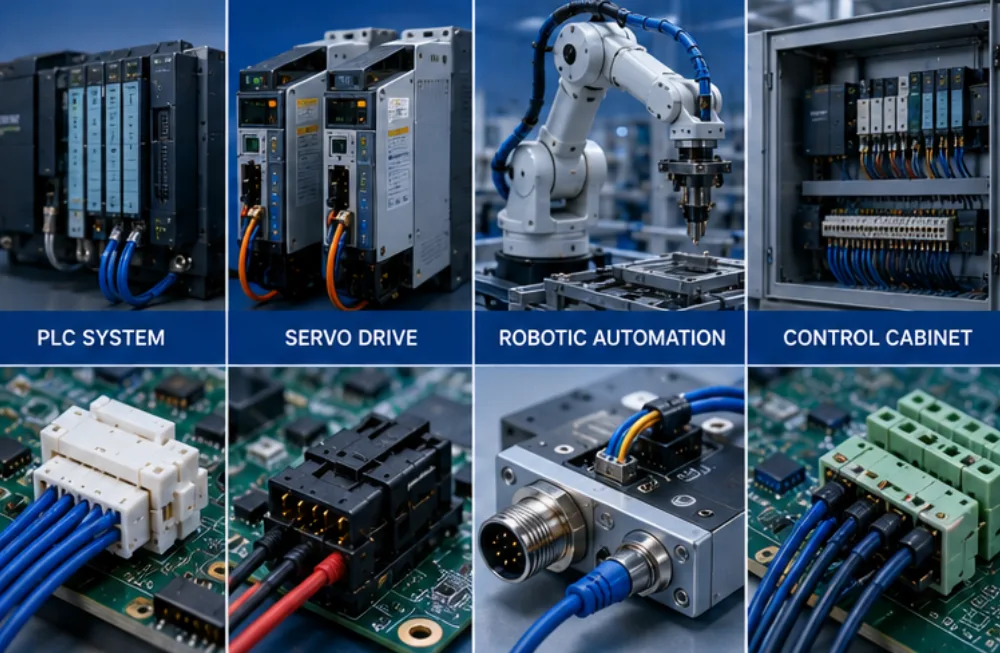
Different industrial control systems require different connector types. Connectors may be used in PLC modules, servo drives, sensors, control panels, power modules, communication interfaces or robotic equipment.
Before selection, buyers should confirm whether the connector is used for signal transmission, power supply, data communication or mixed connection. This determines the required pin count, pitch, current rating, voltage rating and locking structure.
2. Check Current, Voltage And Signal Requirements
Industrial control equipment often requires stable electrical performance under continuous operation. Buyers should confirm current rating, voltage rating, contact resistance, insulation resistance and signal transmission requirements.
For communication modules, signal integrity and shielding performance may be important. For power modules, temperature rise, terminal contact area and safety margin should be evaluated carefully.
3. Evaluate Vibration Resistance And Mechanical Strength
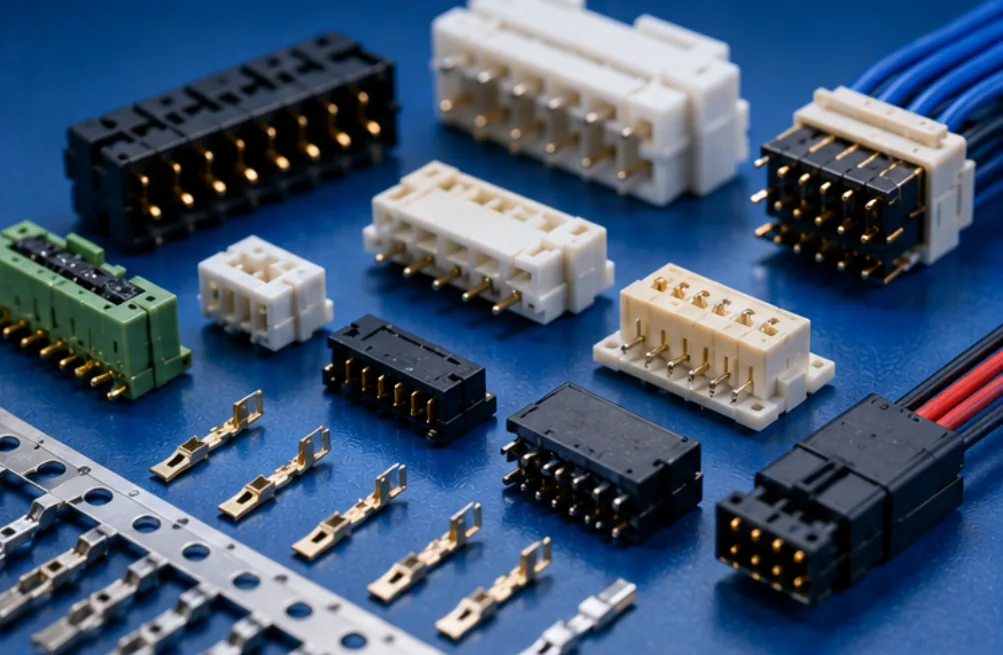
Industrial equipment may operate near motors, conveyors, pumps or robotic systems, where vibration and movement are common. A connector with weak retention may loosen over time and cause signal interruption or equipment failure.
Buyers should check insertion force, withdrawal force, terminal retention, housing strength and locking design. For control cabinets and automation lines, stable mechanical connection is essential for long-term operation.
4. Review Material, Plating And Environmental Resistance
Industrial connectors may face dust, humidity, temperature changes, oil mist or chemical exposure. Terminal material, plating and housing material should be selected according to the real working environment.
Copper alloy terminals provide good conductivity and elasticity. Gold plating or selective plating can improve contact stability for signal transmission, while high-temperature or flame-retardant plastic housing may be required for industrial equipment.
5. Confirm Production Consistency And Testing Standards
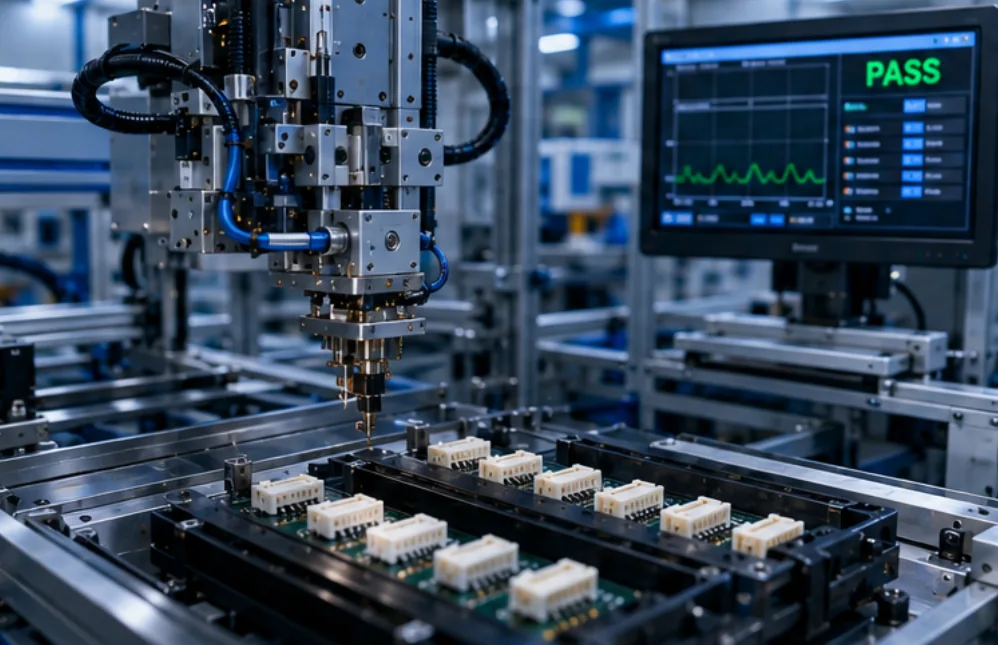
Industrial control equipment often requires long service life and stable spare parts supply. Buyers should choose connectors from manufacturers with consistent stamping, molding, plating and assembly control.
Common tests include contact resistance testing, insertion and withdrawal force testing, vibration testing, thermal cycling and salt spray testing. These tests help reduce field failure risk and improve long-term equipment reliability.
Industrial Control Connector Selection Checklist
| Item | What To Confirm | Why It Matters |
|---|---|---|
| Application | PLC, sensor, servo drive, control panel, power module | Determines connector function and structure |
| Electrical Data | Current, voltage, resistance and signal type | Ensures safe and stable operation |
| Locking Design | Latch, terminal lock, housing retention | Prevents loosening under vibration |
| Material And Plating | Copper alloy, gold/tin plating, flame-retardant housing | Affects durability and contact reliability |
| Environment | Dust, humidity, temperature, oil mist and vibration | Helps select suitable protection level |
| Testing | Resistance, force, vibration, thermal cycling | Reduces downtime and field failure risk |
Conclusion
Choosing connectors for industrial control equipment requires a full review of electrical requirements, mechanical strength, environmental resistance, material quality and production consistency. A reliable connector can help reduce downtime, improve signal stability and support long-term industrial automation performance.
Related product and article resources
For procurement comparison and technical evaluation, readers can continue with these related product pages and supporting articles.
If you need connectors for PLC modules, control cabinets, industrial automation equipment or custom electronic systems, please contact us with your drawings, samples or project requirements.
Contact UsRelated connector categories for evaluation: Board To Board Connectors and Floating Board To Board Connectors. Related reading: how to evaluate connector suppliers for long term production stability. More context: manufacturing and quality.