
How Pin Pitch Affects Connector Selection And PCB Design
Pin pitch is one of the most critical parameters in connector selection and PCB design. It directly affects circuit density, signal performance, manufacturability and product reliability. Understanding how pin pitch influences both connector performance and PCB layout can help buyers and engineers make better design decisions.
Get Quote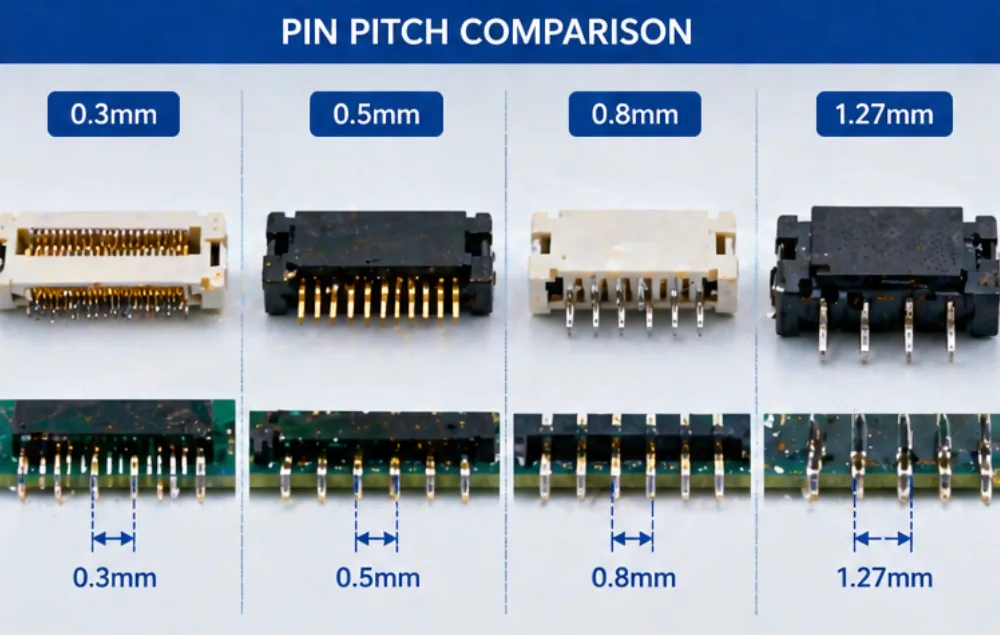
1. What Is Pin Pitch In Connectors
Pin pitch refers to the distance between the center points of two adjacent pins in a connector. Common pitch sizes include 0.3mm, 0.5mm, 0.8mm, 1.0mm and larger options depending on application requirements.
Smaller pitch connectors allow higher circuit density and are commonly used in compact electronic devices. Larger pitch connectors provide better mechanical strength and easier assembly, making them suitable for industrial and power applications.
2. Impact On PCB Layout And Space Utilization
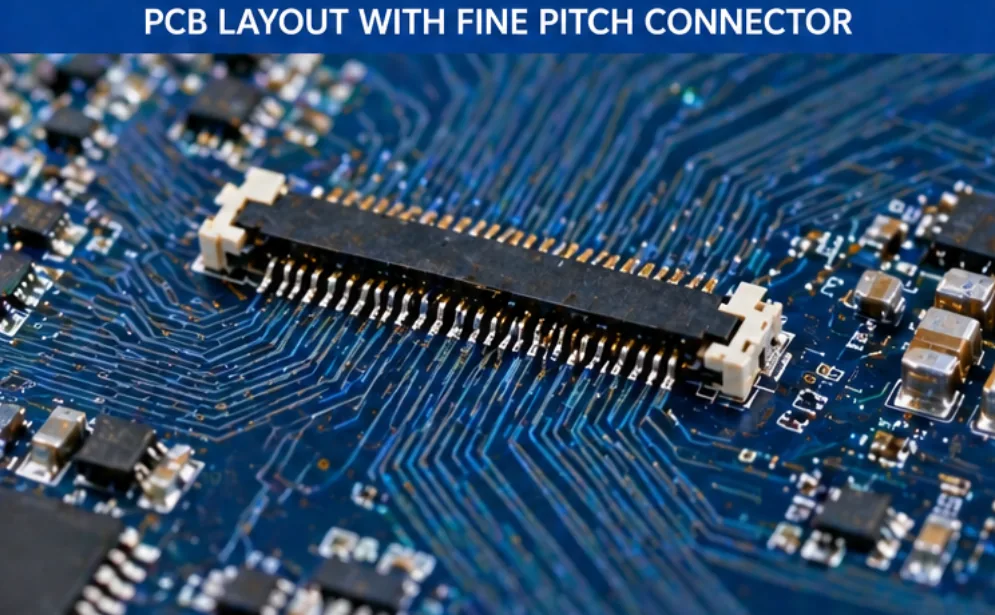
Pin pitch directly affects PCB routing complexity and space usage. Smaller pitch connectors allow designers to place more circuits in a limited area, which is critical for smartphones, tablets and compact modules.
However, fine pitch designs require more precise PCB manufacturing and tighter tolerance control. Trace width, spacing and solder mask design must be carefully managed to avoid short circuits or signal interference.
3. Influence On Signal Performance And Reliability
Fine pitch connectors are often used in high-speed signal transmission applications. However, as pitch decreases, signal integrity becomes more sensitive to design factors such as impedance matching, crosstalk and grounding.
Larger pitch connectors provide more stable contact spacing and can reduce the risk of interference in certain applications. Choosing the correct pitch ensures reliable signal transmission and reduces the risk of performance issues.
4. Manufacturing And Assembly Considerations
Smaller pitch connectors require higher precision in stamping, molding and SMT assembly. Misalignment, poor coplanarity or solder bridging can easily occur if production control is not strict.
Larger pitch connectors are easier to assemble and inspect, making them more suitable for applications where production simplicity and cost control are priorities. Buyers should consider production capability when selecting connector pitch.

5. Choosing The Right Pitch For Different Applications
For compact consumer electronics, smaller pitch connectors are preferred to achieve higher integration. For automotive, industrial and power applications, larger pitch connectors are often selected to improve durability and electrical safety.
Buyers should evaluate product size, electrical requirements, assembly method and long-term reliability before deciding on pitch size. Working with an experienced connector manufacturer can help optimize both performance and cost.
Pin Pitch Selection Checklist
| Pitch Size | Key Advantage | Typical Use |
|---|---|---|
| 0.3mm – 0.5mm | High density, compact design | Smartphones, wearable devices |
| 0.8mm – 1.0mm | Balanced performance and reliability | Consumer electronics, modules |
| 1.27mm and above | Strong structure, easy assembly | Industrial, automotive systems |

Conclusion
Pin pitch plays a key role in connector selection and PCB design. Smaller pitch offers higher density but requires precise manufacturing, while larger pitch improves reliability and ease of assembly. The right choice depends on product requirements, production capability and application environment.
Related product and article resources
For procurement comparison and technical evaluation, readers can continue with these related product pages and supporting articles.
If you need help selecting connector pitch or designing connectors for your PCB projects, contact us for professional support.
Contact UsRelated connector categories for evaluation: Board To Board Connectors and Floating Board To Board Connectors. Related reading: how to evaluate connector suppliers for long term production stability. More context: manufacturing and quality.