
Driving the Software-Defined Vehicle: Bandwidth, Speed, and Convergence
The evolution of the automobile into a software-defined vehicle (SDV) is the primary force reshaping automotive Ethernet connectors. This transformation demands unprecedented data throughput. Future in-vehicle networks, handling data from high-resolution LiDAR, radar, multiple cameras, and over-the-air (OTA) updates, will require a backbone far beyond traditional CAN or LIN buses. This is where high-speed automotive Ethernet, evolving towards multi-gigabit standards like 10BASE-T1S, 100BASE-T1, and 1000BASE-T1 (1 Gbps) and beyond, becomes indispensable. Connectors for these networks must support higher frequencies with superior signal integrity, minimizing crosstalk and insertion loss. The trend is towards connectors that facilitate the convergence of networks, allowing power (via Power over Data Line, PoDL), high-speed data, and even legacy low-speed signals to be efficiently consolidated. This reduces wiring complexity, weight, and cost, enabling the centralized, zonal E/E architectures that are the future of automotive design. The connector is no longer a passive junction but an active enabler of the vehicle's central nervous system.
Meeting Harsh Demands: Robustness, Miniaturization, and Power
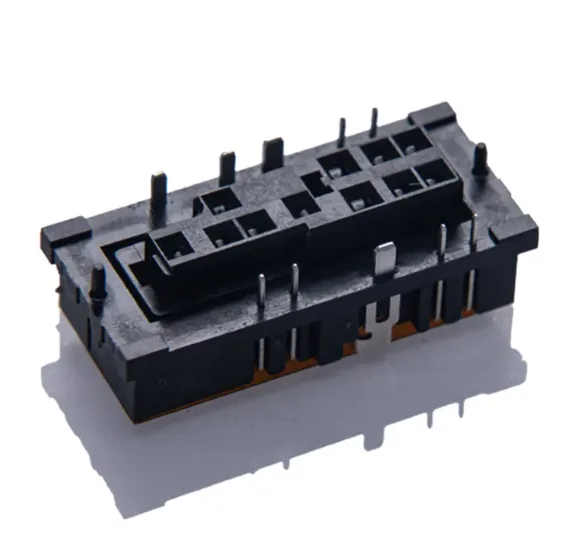
Automotive environments present a unique set of challenges that Ethernet connectors must not only meet but exceed. Future connectors will be engineered for even greater robustness and reliability under extreme conditions. This includes operating across wider temperature ranges (e.g., -40°C to +125°C+), with enhanced resistance to vibration, moisture, and electromagnetic interference (EMI). Shielding effectiveness will be paramount as data speeds increase. Concurrently, the push for miniaturization continues. As electronic control units (ECUs) become more densely packed, connectors like compact Board-to-Board (BTB) and wire-to-board types with finer pitches must provide reliable Ethernet connectivity in minimal space, often alongside traditional signals. Furthermore, the rise of Power over Data Line (PoDL) standards will see connectors designed to safely carry both significant data and electrical power over a single, lightweight cable. This dual requirement for data integrity and power delivery in a harsh, space-constrained environment defines the next generation of ruggedized, high-performance automotive Ethernet connectors.
The Manufacturing Imperative: Precision, Shielding, and Automated Quality
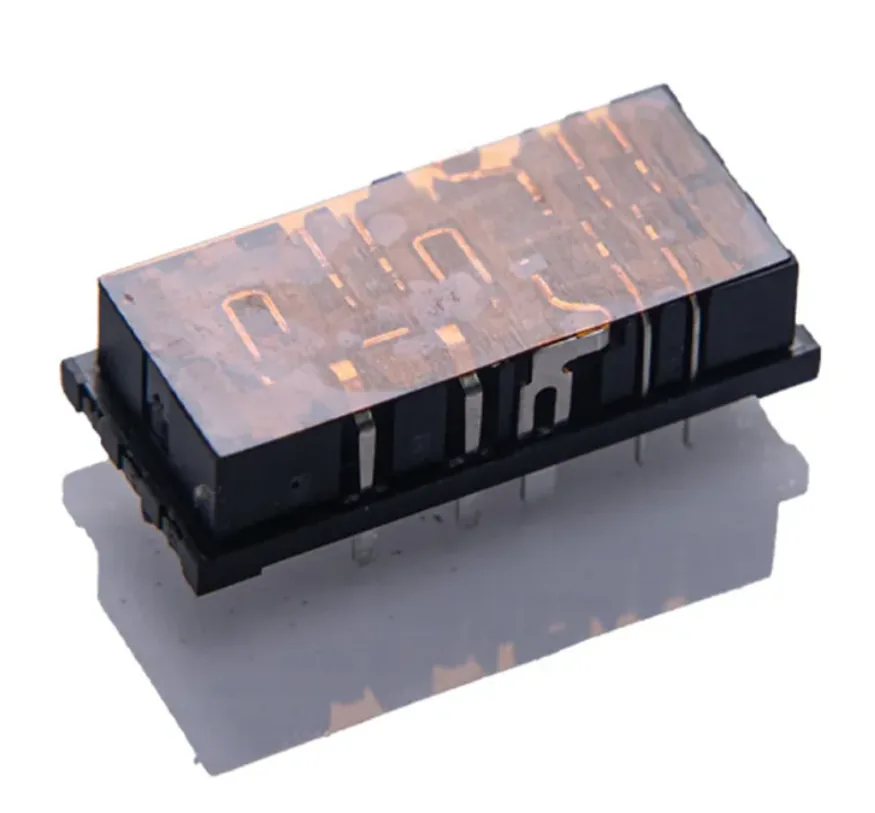
Realizing these advanced connector designs hinges on breakthroughs in precision manufacturing and materials science. The production of high-speed automotive Ethernet connectors demands exceptional control over impedance and crosstalk at the micro level. This requires advanced precision stamping for terminals and sophisticated mold design for housings that incorporate integrated, high-performance shielding. The shielding—often a complex combination of metalized plastic, conductive gaskets, or full metal shells—must provide 360-degree coverage to contain EMI, a critical factor for vehicle safety and compliance. Furthermore, the move towards highly automated assembly and 100% Automated Optical Inspection (AOI) becomes non-negotiable. Given the critical safety role of in-vehicle networks, every connector must be perfect. AOI systems verify minute details like pin coplanarity, contact alignment, and shielding integrity, ensuring consistency across millions of parts. Manufacturers like Weicheng, with deep expertise in vertical integration—controlling the process from mold design and precision stamping to automated assembly—are best positioned to deliver the reliable, high-volume production required for the automotive industry's connected future.
Related product and article resources
For procurement comparison and technical evaluation, readers can continue with these related product pages and supporting articles.
The future of automotive Ethernet connectors is inextricably linked to the rise of the software-defined, electrified, and autonomous vehicle. The trends are clear: a relentless drive for higher bandwidth and network convergence, a non-negotiable demand for extreme environmental robustness and miniaturization, and a foundational reliance on precision manufacturing with integrated shielding. These connectors will form the critical arterial network, carrying the lifeblood of data and power that enables advanced features from autonomous driving to immersive cabin experiences. Success in this domain will belong to manufacturers who can master the trifecta of high-frequency electrical design, ruggedized mechanical engineering, and scalable, automated production. The race is on to build not just connectors, but the reliable, high-speed neural pathways for the next generation of intelligent vehicles.
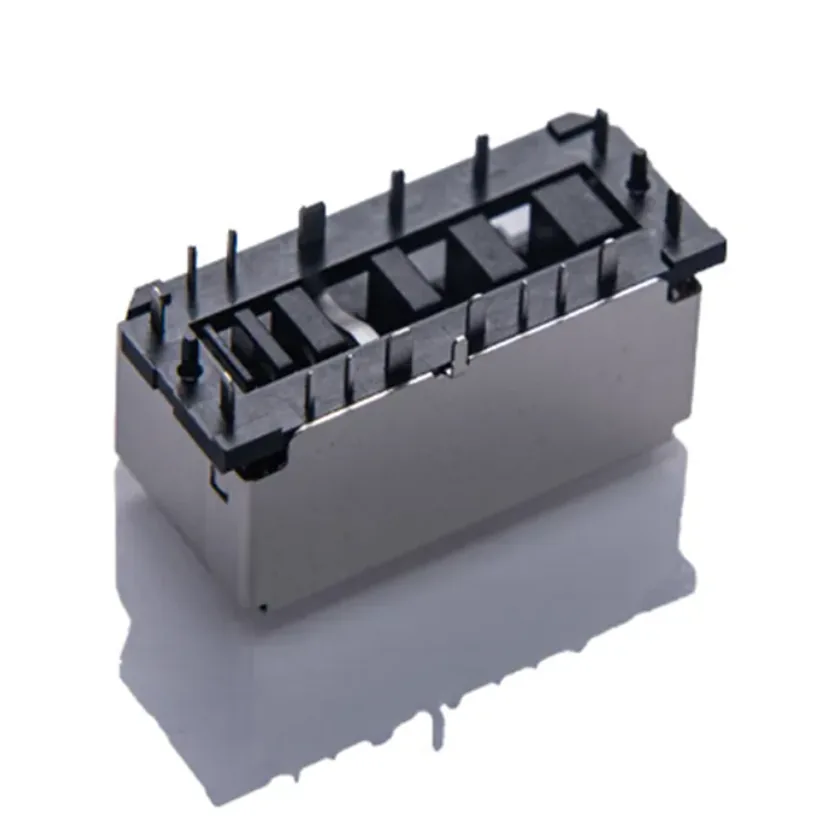
Related connector categories for evaluation: 05mm Pitch Automotive Board To Board Connectors. Related reading: automotive ethernet connectors design guide 2026. More context: cooperation projects.