
What Plating Materials Matter Most In Connector Manufacturing
Plating materials play a critical role in connector performance, affecting conductivity, corrosion resistance, durability and long-term reliability. Choosing the right plating solution is essential for ensuring stable electrical contact in different applications such as consumer electronics, automotive systems and industrial equipment.
Get Quote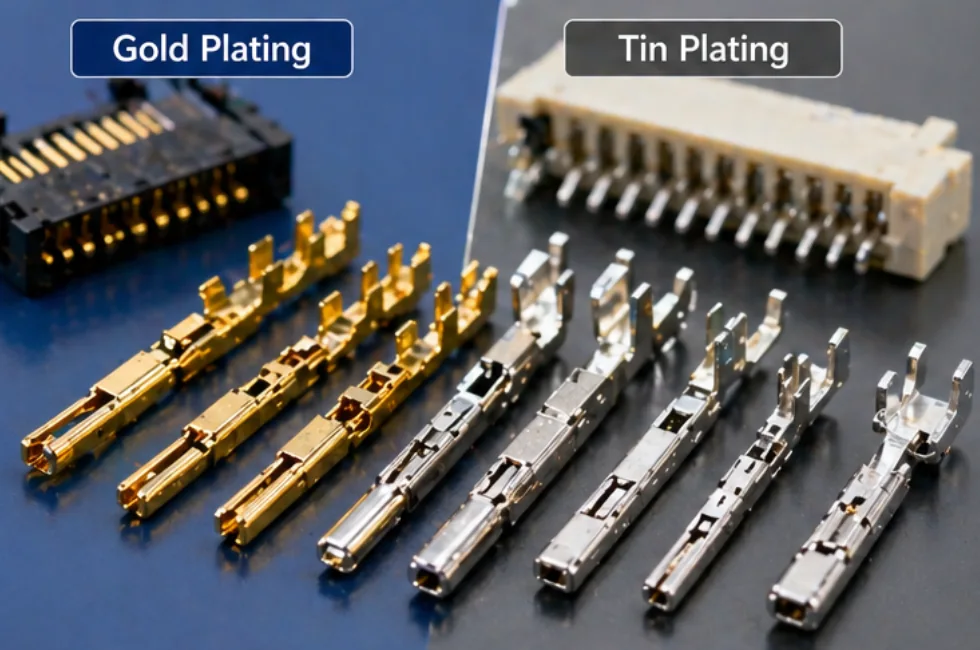
1. Gold Plating: High Reliability And Signal Stability
Gold plating is widely used in high-end connectors due to its excellent conductivity and corrosion resistance. It provides stable contact performance even under low voltage and low current conditions, making it ideal for signal transmission applications.
Connectors used in communication equipment, medical devices and precision electronics often use gold plating to ensure long-term reliability. Although gold plating is more expensive, it significantly reduces contact failure and oxidation risk.
2. Tin Plating: Cost-Effective And Widely Used
Tin plating is commonly used in connectors for power transmission and general-purpose applications. It offers good solderability and lower cost compared to gold plating, making it suitable for large-scale production.
However, tin plating is more prone to oxidation and may have higher contact resistance over time. It is generally recommended for applications where cost control is important and environmental conditions are less demanding.
3. Nickel Plating: Base Layer For Durability
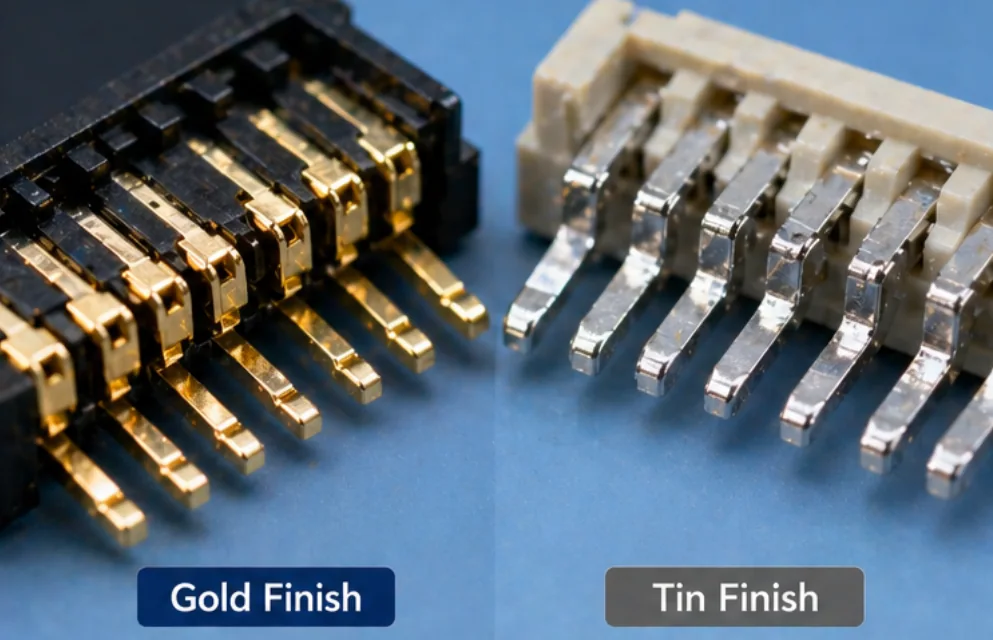
Nickel plating is often used as an underlayer beneath gold or tin plating. It improves hardness, wear resistance and adhesion of the top plating layer.
Nickel also acts as a barrier to prevent diffusion between base metal and surface plating. In connector manufacturing, it helps extend product life and maintain consistent performance during repeated mating cycles.
4. Selective Plating And Mixed Plating Solutions
In many applications, connectors use selective plating to balance performance and cost. For example, gold plating may be applied only on contact areas, while tin plating is used on soldering areas.
This approach reduces material cost while maintaining reliable electrical performance. Buyers should confirm plating thickness, plating area and process consistency to ensure stable product quality.
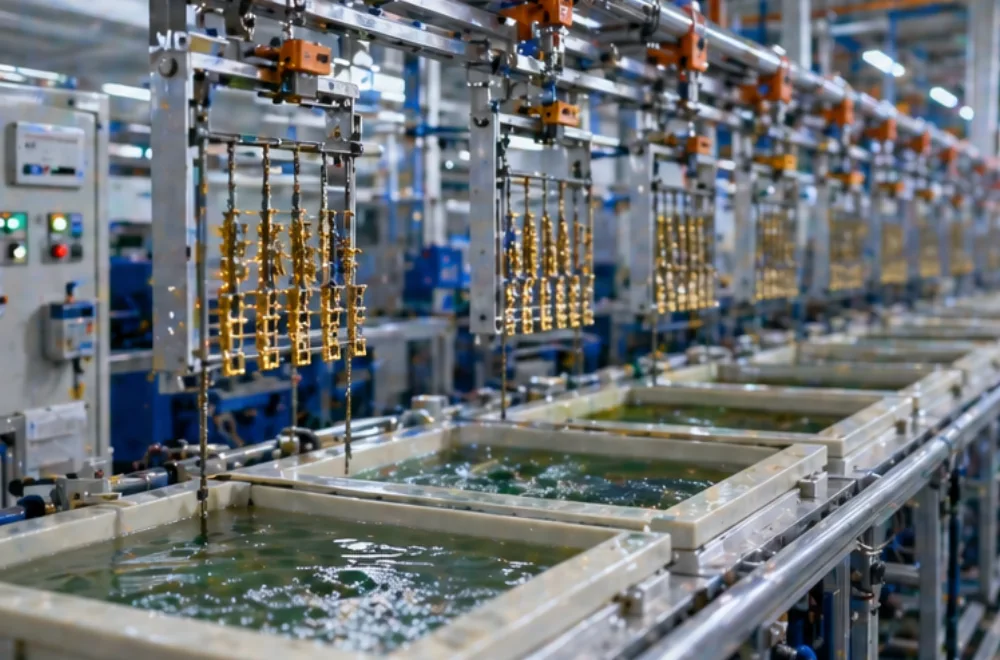
5. Choosing The Right Plating Based On Application
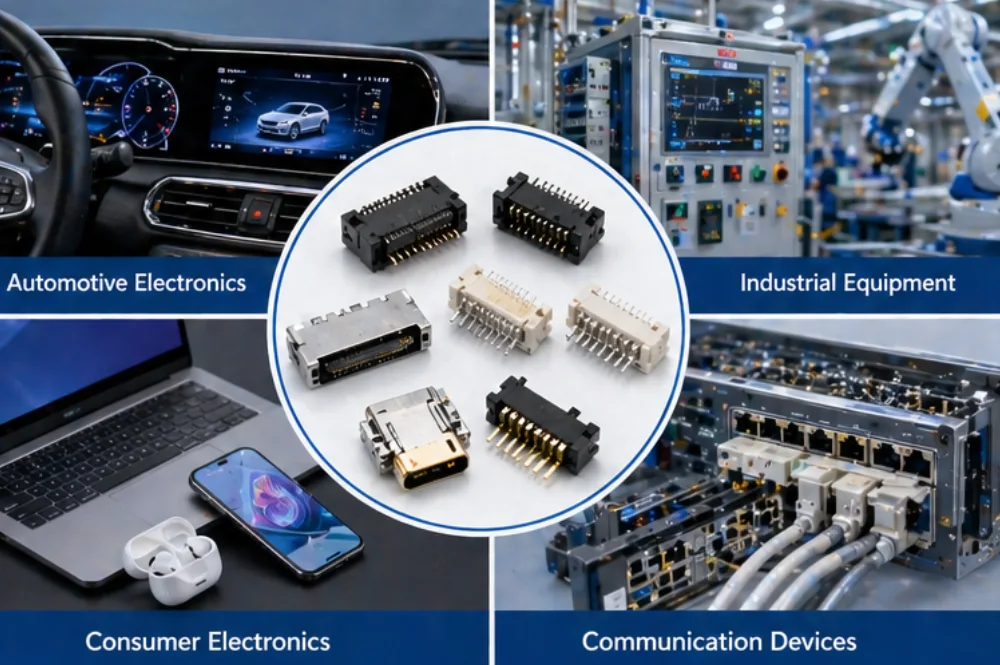
Different applications require different plating solutions. Consumer electronics may focus on cost and compact design, while automotive and industrial systems require higher durability and environmental resistance.
Buyers should consider operating environment, mating cycles, electrical requirements and expected product life when selecting plating materials. Working with an experienced connector manufacturer can help optimize the balance between cost and performance.
Connector Plating Selection Checklist
| Plating Type | Key Advantage | Typical Application |
|---|---|---|
| Gold | Excellent conductivity and corrosion resistance | Signal transmission, medical, communication |
| Tin | Low cost and good solderability | Power connectors, consumer electronics |
| Nickel | Wear resistance and barrier protection | Base layer for plating systems |
Conclusion
Plating materials are one of the most critical factors in connector manufacturing. Gold, tin and nickel plating each offer unique advantages, and the right choice depends on application requirements, cost considerations and environmental conditions.
If you need support in selecting connector materials or developing custom connector solutions, contact us for professional guidance and quotation.
Contact UsRelated connector categories for evaluation: Board To Board Connectors and Floating Board To Board Connectors. Related reading: how to evaluate connector suppliers for long term production stability. More context: manufacturing and quality.