
How To Choose A Board To Board Connector For Electronic Devices
Board to board connectors are widely used in compact electronic devices, industrial control systems, communication modules, automotive electronics, medical devices and smart hardware. Choosing the right connector is not only about pin count or pitch, but also about signal stability, mechanical strength, assembly method and long-term reliability.
Get Quote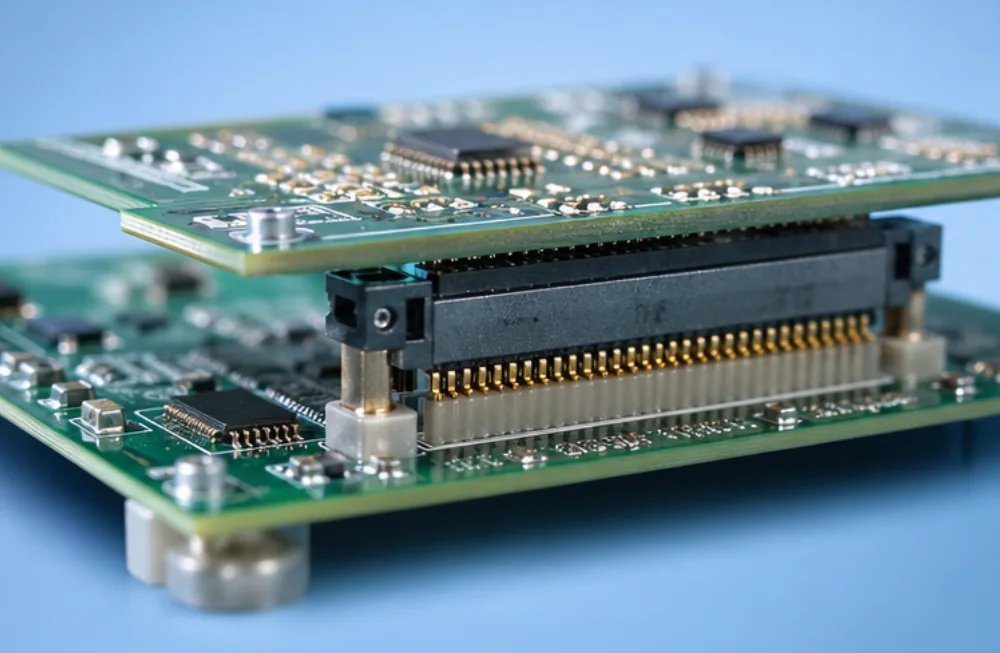
1. Confirm The PCB Structure And Connection Direction
The first step is to understand how the two PCBs will be connected. Board to board connectors can support vertical, right-angle, parallel stacking or mezzanine connection designs. For compact electronic products, the available internal space is often limited, so the connector height, mating direction and stacking distance must be confirmed before selection.
Buyers should check the PCB layout, device thickness, enclosure space and assembly method. If the connector is used in a high-density electronic product, a smaller pitch may save space, but it also requires higher precision in molding, stamping and assembly. For devices that may experience vibration or frequent movement, a stronger mating structure is usually more important than simply choosing the smallest size.
2. Check Pitch, Pin Count And Current Requirement
Pitch and pin count directly affect PCB design and electrical performance. Common board to board connector pitches include fine-pitch options for compact signal transmission and larger-pitch options for stronger mechanical strength or higher current capacity. The right choice depends on the product function, circuit density and expected operating environment.
For signal transmission, buyers should pay attention to contact resistance, insulation resistance, voltage rating and signal integrity. For power-related applications, current rating and temperature rise are more critical. If the connector is used in automotive electronics, industrial control or medical devices, the design should leave enough safety margin instead of only meeting the minimum parameter requirement.
3. Evaluate Material, Plating And Contact Reliability
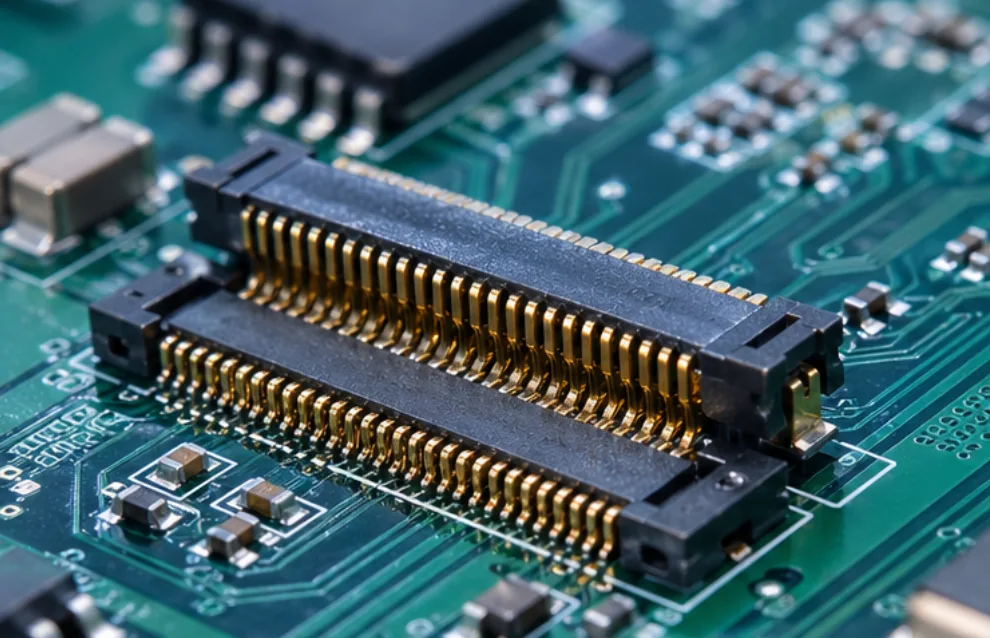
A reliable board to board connector depends heavily on terminal material, plastic housing material and surface plating. Copper alloy terminals are commonly used because they provide good conductivity and elastic performance. The housing material should offer dimensional stability, heat resistance and sufficient insulation performance during SMT soldering and product operation.
Plating is another key factor. Gold plating can improve contact stability and corrosion resistance, especially for low-current signal transmission and high-reliability applications. Tin plating is often used for cost-sensitive applications. Buyers should choose plating thickness according to product life cycle, mating frequency, working environment and reliability requirements.
4. Consider SMT Process And Assembly Stability
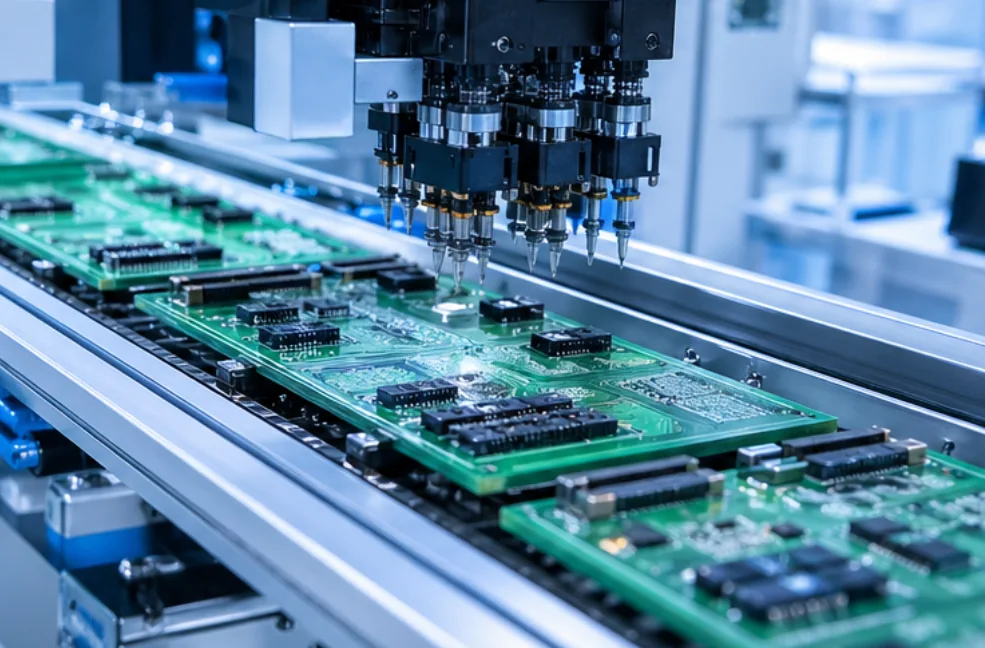
Many board to board connectors are assembled through SMT production lines. Therefore, solderability, coplanarity, packaging method and heat resistance must be checked. Poor coplanarity may cause soldering defects, unstable contact or product failure after assembly.
For mass production, buyers should ask whether the connector supplier can provide stable tape-and-reel packaging, automated inspection support, consistent terminal forming and strict dimensional control. A connector that looks suitable in samples may still create production issues if the batch consistency is weak.
5. Match The Connector With Real Application Conditions
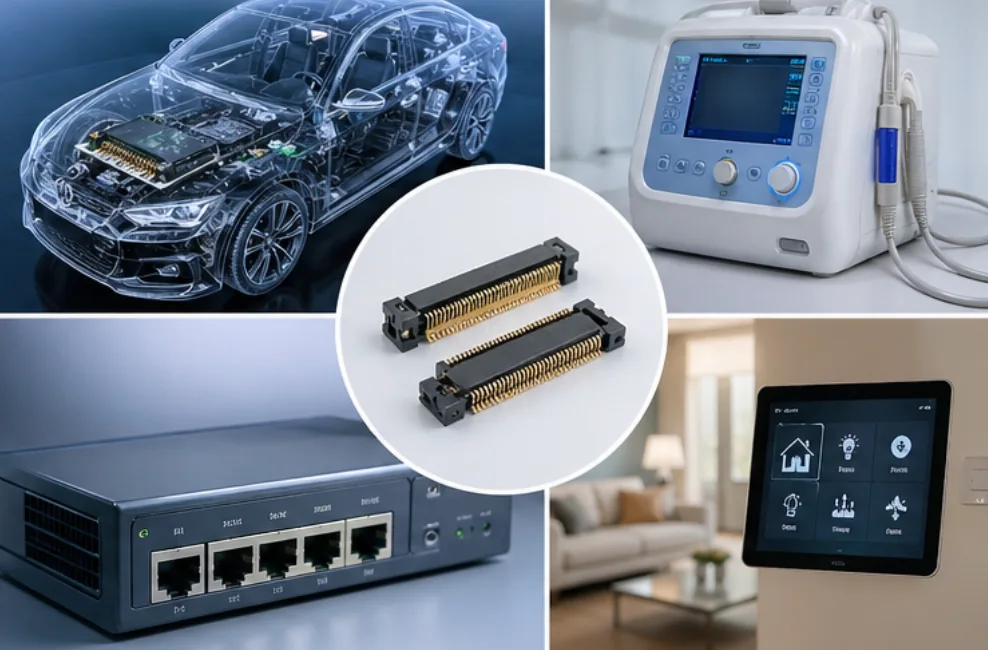
Different electronic devices require different connector priorities. Consumer electronics usually focus on compact size, stable signal and cost control. Automotive electronics require vibration resistance, temperature stability and long-term reliability. Medical and industrial devices often require higher safety margin, material consistency and traceable quality control.
Before ordering, buyers should provide PCB drawings, target pitch, pin count, mating height, current rating, voltage rating, operating temperature, mating cycles, packaging requirement and expected annual volume. If the product is still in the design stage, working with a connector manufacturer early can reduce redesign cost and shorten development time.
Board To Board Connector Selection Checklist
| Item | What To Confirm | Why It Matters |
|---|---|---|
| Pitch | PCB space and signal density | Affects layout, size and assembly accuracy |
| Pin Count | Number of signal or power circuits | Determines product function and PCB design |
| Mating Height | Distance between two PCBs | Important for compact device structure |
| Material | Terminal and housing material | Affects conductivity, strength and heat resistance |
| Plating | Gold, tin or customized plating | Affects contact stability and corrosion resistance |
| Packaging | Tape-and-reel or tray | Affects SMT production efficiency |
Conclusion
Choosing a board to board connector requires a complete evaluation of mechanical structure, electrical performance, material, plating, SMT assembly and real application conditions. For electronic device manufacturers, the best connector is not always the smallest or cheapest one, but the one that provides stable performance, reliable production compatibility and long-term quality consistency.
If you need board to board connectors, custom connector development or connector selection support for electronic devices, automotive electronics, medical devices, communication equipment or smart hardware, please contact us for technical support and quotation.
Contact UsRelated product and article resources
For procurement comparison and technical evaluation, readers can continue with these related product pages and supporting articles.
Related reading: board to board connector pitch and stack height selection guide.