
The Engineering Challenge: Dynamic Flexibility in a Compact Space
Foldable smartphones and advanced wearables represent a pinnacle of consumer electronics design, pushing the boundaries of form and function. At the heart of this revolution lies a critical hardware enabler: flexible printed circuit (FPC) and miniaturized board-to-board (BTB) connectors. These are not standard off-the-shelf components; they are precision-engineered solutions designed to conquer unique challenges. The primary demand is for dynamic flexibility. FPC connectors, linking displays and mainboards across a hinge, must withstand hundreds of thousands of repetitive bends without signal degradation or mechanical failure. Simultaneously, the drive for slimmer, lighter devices demands extreme miniaturization. This is where ultra-fine-pitch (e.g., 0.4mm) BTB connectors come in, enabling dense, multi-signal connections between stacked or hinged PCBs within a minuscule z-height. This combination of robust flexibility and space-saving design allows engineers to pack more functionality—from high-resolution displays and multi-camera arrays to sophisticated sensors—into a device that can physically transform, making the impossible form factor a tangible reality.
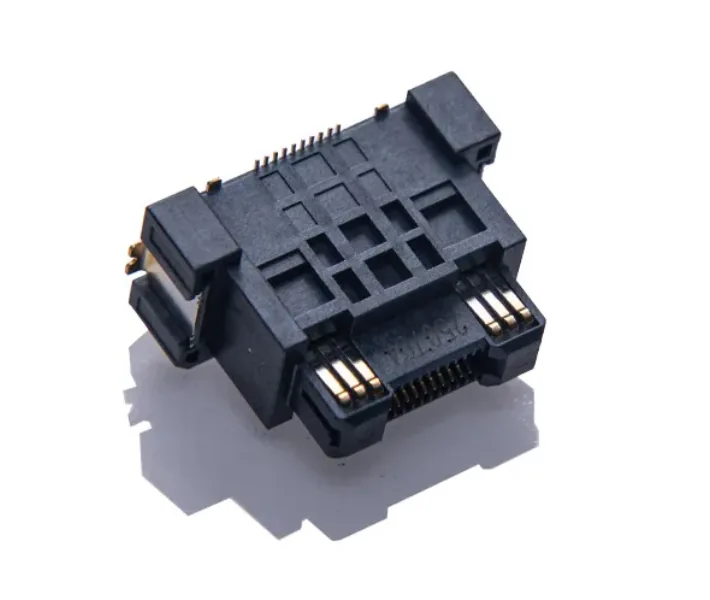
Enabling Form and Function: Hinge Dynamics and Wearable Comfort
The success of a foldable device hinges, quite literally, on the reliability of its interconnects within the folding mechanism. Here, FPC connectors excel. They are specifically designed to act as a flexible bridge, routing power, high-speed video data (for the main and cover displays), and touch signals across the moving hinge. This requires not just flexibility, but also exceptional durability against torsion and shearing forces, often ensured by specialized reinforcing materials and strain relief designs. For wearables like smartwatches and fitness bands, the challenges shift towards ultra-low profile and body-conforming designs. Connectors in these applications must facilitate connections to curved batteries, flexible sensors, and small, densely packed PCBs, all while contributing to a device that is comfortable for 24/7 wear. This demands a mastery of precision stamping for thin, reliable contacts and micro-molding for compact, robust housings. Whether enabling the seamless book-like fold of a phone or the secure, low-profile connection in a smart ring, these advanced FPC and BTB connectors are the unsung heroes that translate bold industrial designs into functional, daily-use products.
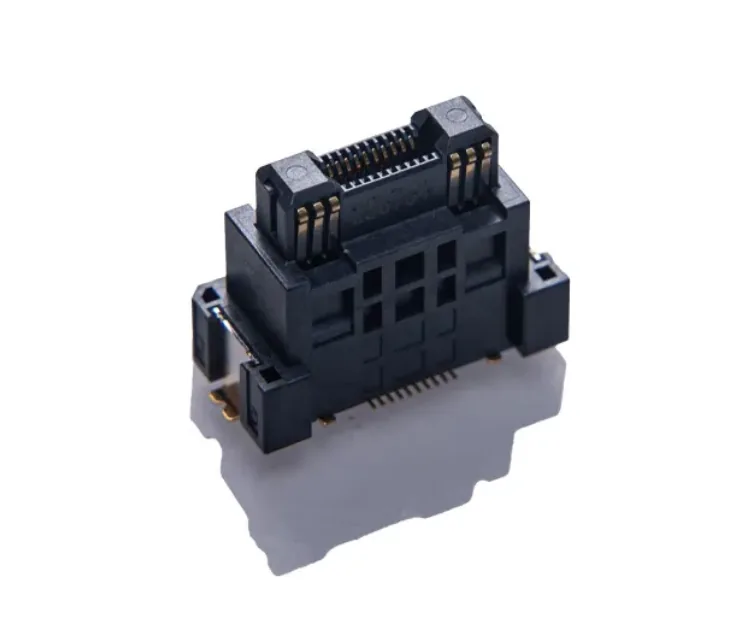
Precision Manufacturing: The Foundation of Reliability
The demanding performance of connectors in foldables and wearables is not achieved by design alone; it depends on controlled precision manufacturing and verification. The microscopic tolerances and high-reliability requirements push production capabilities to their limits. This is where a manufacturer's core competencies, like those at Weicheng, become decisive. The production of ultra-fine-pitch BTB connectors relies on in-house precision mold design and high-speed, micro-stamping technology to create contact terminals with controlled geometry and consistent plating, ensuring stable electrical performance. For FPC connectors, the quality of the precision-stamped contacts and the design of the actuator (e.g., flip-lock, zero-insertion-force) are critical for smooth mating and long-term retention. Furthermore, a high degree of automation in assembly and 100% Automated Optical Inspection (AOI) are non-negotiable. They ensure that every single connector, with its sub-millimeter features, is free from defects like bent pins, misalignments, or contamination—flaws that are invisible to the naked eye but catastrophic for device functionality. This marriage of innovative design and vertically integrated, automated manufacturing is what allows these tiny connectors to bear the immense responsibility of connecting the future of mobile technology, one reliable fold and comfortable wear at a time.
Related product and article resources
For procurement comparison and technical evaluation, readers can continue with these related product pages and supporting articles.
In summary, the rise of foldable devices and sophisticated wearables is intrinsically linked to the advancement of FPC and BTB connector technology. These components are the critical, yet often invisible, enablers that solve the dual challenges of dynamic mechanical movement and extreme spatial constraints. They allow for the seamless flow of power and data across moving joints and within impossibly slim profiles. Their reliability directly dictates the product's longevity, functionality, and user experience. Therefore, success in this cutting-edge market segment depends not just on visionary device design, but fundamentally on partnering with connector manufacturers that possess the deep precision engineering expertise and vertically controlled manufacturing mastery to turn these intricate interconnect concepts into durable, mass-producible reality. The future of personal electronics flexes and wears comfortably on the back of these microscopic marvels of engineering.
Related connector categories for evaluation: Lvds Connectors and 05mm Lvds 20454 With Pull. Related reading: board to board lvds connector faq.