
The Engineering Challenge: Managing Misalignment in a Dynamic Environment
The quest for greater reliability in automotive electronics runs into a fundamental physical challenge: mismatched coefficients of thermal expansion (CTE) between different printed circuit board (PCB) materials and the inevitable mechanical tolerances in assembly. A standard rigid board-to-board (BTB) connector demands near-perfect alignment between its mating halves. In the real world, however, the automotive environment subjects electronic assemblies to severe thermal cycling—from frigid starts to engine bay heat—causing substrates to expand and contract at different rates. Simultaneously, vehicle vibration and shock from road inputs create constant relative motion. These forces exert stress on rigid connector solder joints, potentially leading to cracked solder balls or compromised electrical contacts over time. A floating connector addresses this by design, incorporating built-in compliance mechanisms that allow for controlled movement—typically in the X, Y, and sometimes Z (vertical) axes—accommodating these positional shifts without transferring destructive stress to the solder connections. This inherent forgiveness is the first pillar of reliability, transforming a potential failure point into a robust, stress-managing interface.
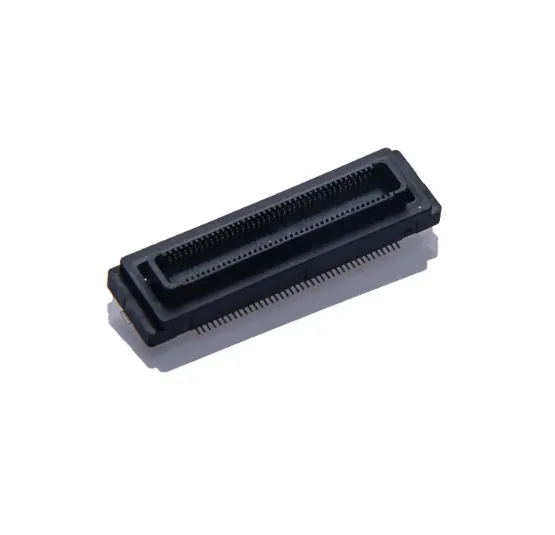
Precision in Motion: The Mechanics of Floating Design
The effectiveness of a floating connector hinges on the precise engineering of its movement. The core mechanism often involves a two-part design: a receptacle housing fixed to one PCB and a plug that is allowed to "float" within a defined range relative to its mounting points on the opposing PCB. This controlled movement is enabled by a compliant interconnect system, which may consist of specially designed spring contacts, flexible circuits within the housing, or a gimbal-like suspension. The key is that this movement is not loose or unstable; it is a precisely calibrated mechanical compliance that absorbs misalignment while maintaining consistent, low-resistance electrical contact. The contacts themselves are typically designed with a generous contact wipe action during mating, which scrubs away oxides and ensures a gas-tight connection, further enhancing long-term reliability. For a manufacturer like Weicheng, producing such connectors requires mastery of high-precision stamping to create these specialized spring contacts and micro-molding to produce housings that precisely guide the float movement without introducing undue play. This precision ensures the connector performs its compensatory role reliably over thousands of mating cycles and throughout the vehicle's lifetime, without signal degradation or intermittent connections.
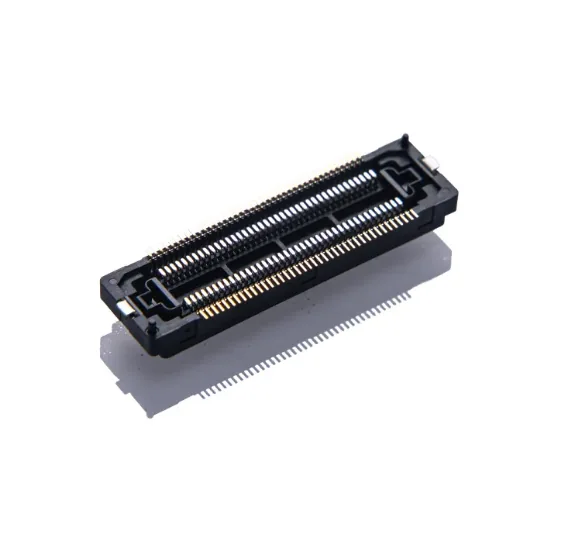
Enabling Next-Generation Dense and Reliable Assemblies
The value of floating board-to-board connectors extends beyond solving a problem; they are enablers of advanced automotive electronic architectures. As vehicles adopt more zonal E/E architectures and domain controllers, PCBs become more densely packed with components, leaving less room for error. The use of floating connectors allows engineers to design with greater layout flexibility, as they can accommodate the cumulative tolerances of multiple stacked boards or modules within a housing. This is critical for complex systems like ADAS sensor fusion units, central gateways, or high-performance infotainment computers, where multiple high-speed signal and power boards must be interconnected reliably. Furthermore, by eliminating stress on solder joints, floating connectors directly contribute to meeting stringent automotive reliability standards for thermal cycling and vibration resistance. This makes them ideal for applications in under-hood control units or anywhere near the engine, where temperatures fluctuate wildly. The implementation of such connectors, backed by a manufacturer's proven capabilities in automation and 100% AOI (Automated Optical Inspection), supports repeatable assembly of the compliance mechanism, with production lots subject to defined inspection criteria. Thus, the floating connector evolves from a component into a system-level solution for robust interconnection.
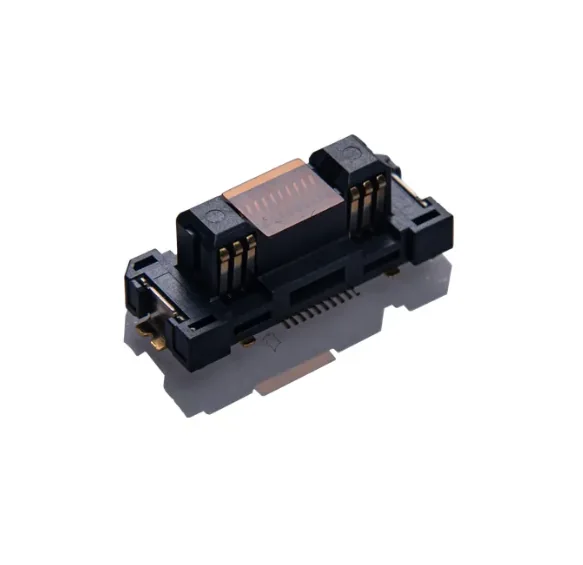
Related product and article resources
For procurement comparison and technical evaluation, readers can continue with these related product pages and supporting articles.
In conclusion, floating board-to-board connectors are a sophisticated engineering response to the immutable physical challenges of the automotive world. They ensure reliability not by resisting the inevitable—thermal expansion, vibration, and assembly variances—but by intelligently accommodating it. Through their precisely engineered compliance mechanisms, they absorb stress and misalignment, protecting delicate solder joints and ensuring uninterrupted electrical contact. This capability makes them indispensable for the dense, high-performance electronic assemblies that define modern vehicles, from powertrain controllers to autonomous driving systems. Their successful implementation relies on a deep synergy between innovative mechanical design and high-precision, automated manufacturing. As automotive electronics continue to push the boundaries of complexity and performance, the role of the floating connector as a guardian of long-term interconnection integrity will only become more critical, solidifying its position as a key enabler of automotive innovation.
Related connector categories for evaluation: 05mm Pitch Automotive Board To Board Connectors. Related reading: floating connector vs standard board connector for automotive electronic. More context: manufacturing and quality.