
The Data Highway for In-Vehicle Vision: Demands of High Speed and Low Noise
The modern vehicle's interior is dominated by digital displays, and its perception of the outside world is driven by a suite of cameras. This visual revolution generates immense amounts of data that must be transmitted with uncompromising speed and fidelity. This is where Low-Voltage Differential Signaling (LVDS) connectors establish themselves as the critical data highway. Unlike single-ended signaling, the LVDS standard transmits data as the difference between two complementary signals, providing inherent resistance to electromagnetic interference (EMI). This capability is paramount in the electrically noisy automotive environment, where signals from motors, power electronics, and wireless systems can corrupt data. For high-resolution displays (from clusters to center consoles) and Advanced Driver-Assistance Systems (ADAS) cameras, LVDS connectors facilitate the transmission of uncompressed video streams with high signal integrity, ensuring that the information presented on screens or processed by control units is accurate, clear, and free from artifacts. The reliability of this data link directly impacts both the user experience and, more critically, the safety decisions made by ADAS algorithms.
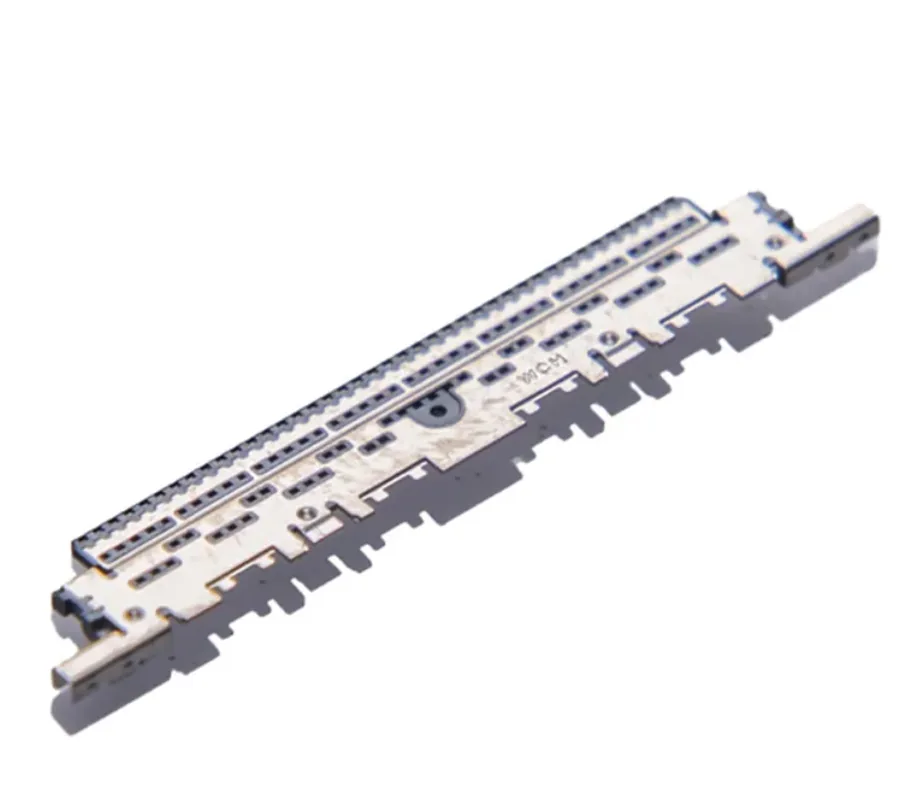
Engineering for Automotive Extremes: Robustness in Harsh Environments
Automotive applications are among the most demanding for any electronic component. LVDS connectors for these applications must be engineered to perform reliably where consumer-grade parts would fail. They are subjected to extreme thermal cycling, from the frigid cold of winter starts to the intense heat generated under the hood or behind sun-exposed displays. Connectors must maintain stable electrical characteristics across a wide operating temperature range (e.g., -40°C to +105°C or higher). Furthermore, they must withstand constant vibration and shock from road irregularities without suffering from contact fretting or disconnection. This demands a focus on robust mechanical design, including secure locking mechanisms, precision-machined terminals with optimal normal force, and housings made from high-temperature, dimensionally stable plastics. The connectors must also be resistant to humidity and chemical exposure. Manufacturers like Weicheng, with experience manufacturing connectors for automotive applications and a vertical integration model controlling processes from precision stamping to automated assembly, are equipped to produce LVDS connectors that meet these stringent requirements for long-term durability and reliability in the vehicle's lifespan.
Enabling System Integration: Miniaturization and Future-Proofing
As vehicles evolve towards greater electrification and autonomy, the number of cameras and displays increases, while the available space for wiring harnesses and electronic control units (ECUs) shrinks. This creates a powerful trend towards miniaturization and high-density integration. LVDS connectors are evolving to meet this challenge. Developments include finer pitch designs and compact form factors (such as those in Board-to-Board (BTB) or FPC configurations) that allow for more signals to be routed in less space, directly on or between densely packed PCBs. This miniaturization must not come at the cost of performance. Maintaining impedance control and effective shielding in a smaller footprint is a significant engineering feat, often requiring advanced materials and simulation-driven design. Furthermore, to support the higher data rates of next-generation, high-dynamic-range (HDR) cameras and ultra-high-resolution displays, LVDS connectors are being designed to support emerging, faster serial link standards that build upon the robust electrical principles of LVDS. This forward-looking design ensures that the connector is not a bottleneck but a future-proof conduit, enabling the seamless integration of the sophisticated visual systems that define the connected and autonomous vehicles of tomorrow.
Related product and article resources
For procurement comparison and technical evaluation, readers can continue with these related product pages and supporting articles.
In conclusion, LVDS connectors serve as the indispensable, high-fidelity neural pathways for in-vehicle vision systems. Their critical role is defined by a triad of non-negotiable requirements: providing EMI-resistant, high-speed data transmission for signal integrity; demonstrating exceptional robustness to survive the automotive environment's thermal, vibrational, and chemical stresses; and evolving towards miniaturized, high-density designs to enable next-generation vehicle architectures. As the industry's reliance on cameras and displays intensifies, the performance and reliability of these connectors become directly linked to vehicle safety, functionality, and user experience. Partnering with a connector manufacturer that masters the intricate balance of high-frequency electrical design, robust mechanical engineering for vehicle environments, and precision, automated manufacturing is essential for any OEM or Tier-1 supplier aiming to lead in the era of software-defined and autonomous vehicles.
Related connector categories for evaluation: 05mm Lvds 20454 With Pull. Related reading: board to board lvds connector faq.