
Custom Connector Mold Development: Cost, Lead Time And Sample Process
Custom connector mold development is often required when standard connectors cannot match PCB layout, mating height, pin arrangement, housing structure or application requirements. Understanding mold cost, lead time and sample process helps buyers plan budgets, reduce delays and move from prototype to mass production more smoothly.
Get QuoteWhen Does A Custom Connector Need A New Mold?
A new mold may be needed when the connector structure, pin count, pitch, mating height, housing shape or mounting method cannot be achieved by existing product series. For compact electronic devices, automotive modules, medical electronics and industrial control boards, small structural differences may require custom tooling.
Before starting mold development, buyers should ask the supplier whether an existing connector platform can be modified. If modification is possible, cost and lead time may be lower. If a completely new structure is required, mold development should be planned as part of the project schedule.
What Affects Custom Connector Mold Cost?
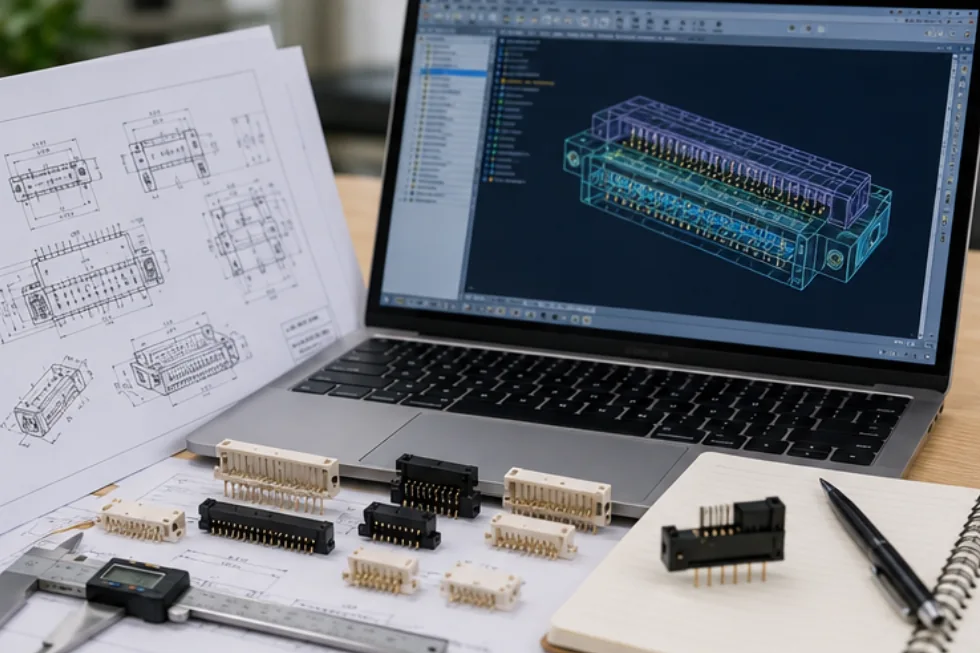
Connector mold cost depends on product complexity, terminal structure, housing design, tolerance requirements, cavity number, mold material and expected production volume. Fine pitch connectors, complex locking structures and high-precision terminals usually require more precise tooling and higher development cost.
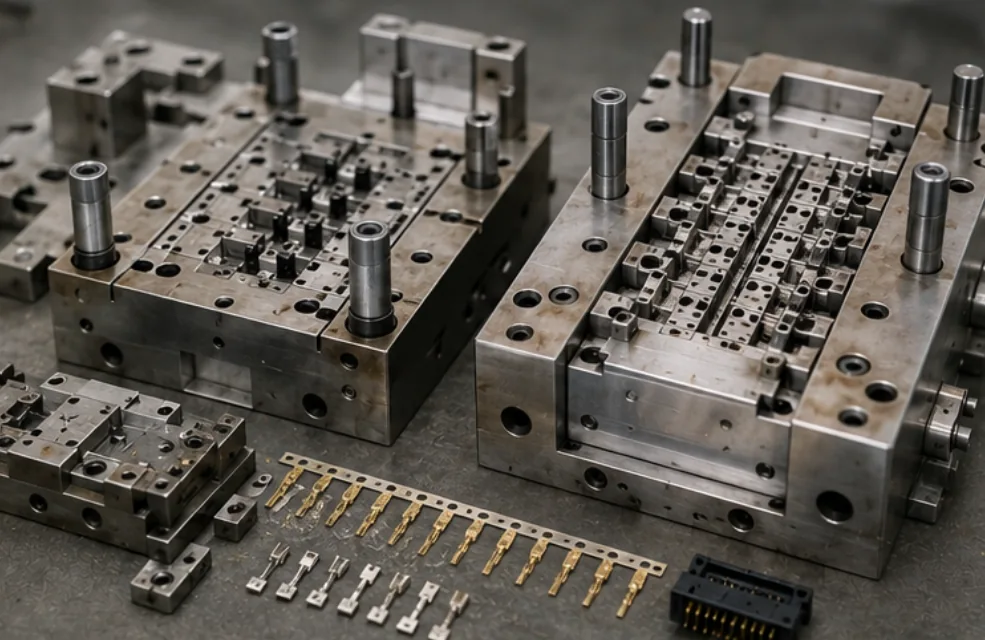
For custom connector projects, mold cost may include stamping mold, injection mold, assembly fixture and inspection fixture. Buyers should confirm whether the quoted mold fee includes all tooling items, future mold modification and sample trial costs.
Typical Lead Time From Drawing Review To Sample
The lead time for custom connector mold development usually depends on engineering review, mold design, tooling fabrication, trial production, sample inspection and adjustment. Simple modifications may move faster, while fully customized connector structures require more time for mold validation.
Buyers should prepare drawings, 3D files, PCB layout, sample photos and target specifications early. Clear technical information reduces repeated communication and helps the manufacturer shorten development time.
Sample Process Before Mass Production
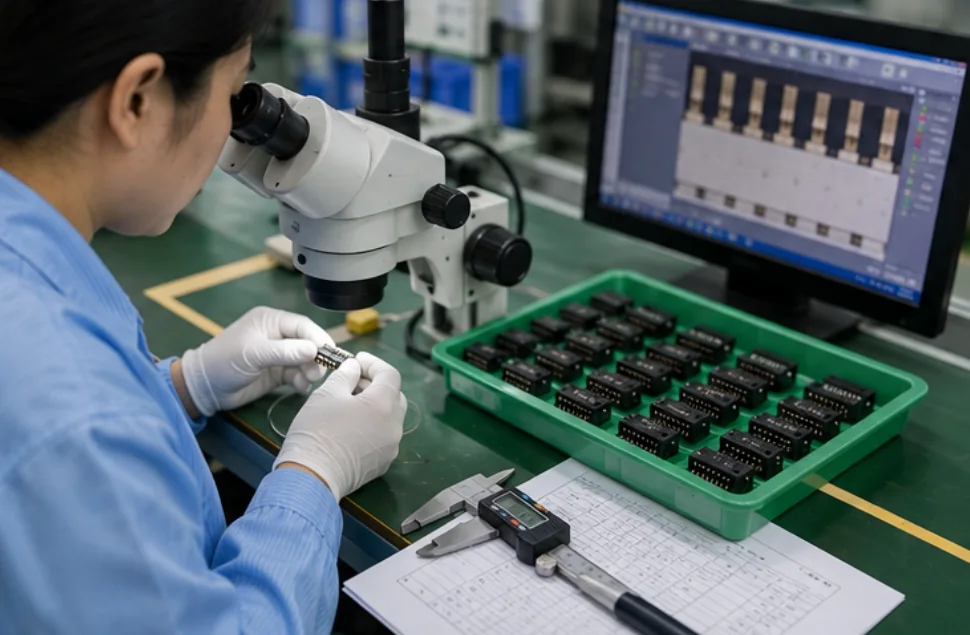
After the mold is completed, the supplier usually produces trial samples for dimensional inspection, mating test, electrical test and assembly evaluation. Buyers should test the samples on the actual PCB or device structure before approving mass production.
If the first sample does not fully match the requirement, mold adjustment may be required. This is normal in custom connector development, especially for fine pitch, high-density or special locking structure connectors.
How Buyers Can Reduce Mold Development Risk
To reduce risk, buyers should provide complete specifications before development. This includes connector type, pitch, pin count, mating height, current rating, voltage rating, material requirement, plating requirement, application environment, sample quantity and future demand forecast.
It is also important to confirm mold ownership, mold maintenance, modification policy and expected production volume. For long-term OEM projects, choosing a supplier with strong tooling, stamping, molding and assembly capability is more important than only comparing the lowest mold price.
Custom Connector Mold Development RFQ Checklist
| Information Needed | Examples | Why It Matters |
|---|---|---|
| Connector Type | Board to board, FPC, wire to board, LVDS, Type-C | Determines mold structure and production process |
| Drawing Files | 2D drawing, 3D file, PCB layout, sample photo | Helps engineering team review feasibility |
| Key Dimensions | Pitch, pin count, mating height, cable direction | Affects tolerance and mold precision |
| Material And Plating | Copper alloy, gold plating, tin plating, high-temp plastic | Affects cost and reliability |
| Sample Requirement | Prototype samples, trial samples, pre-production samples | Helps plan sample process and inspection |
| Production Forecast | Monthly demand, annual demand, target launch date | Helps optimize tooling investment and unit price |
Conclusion
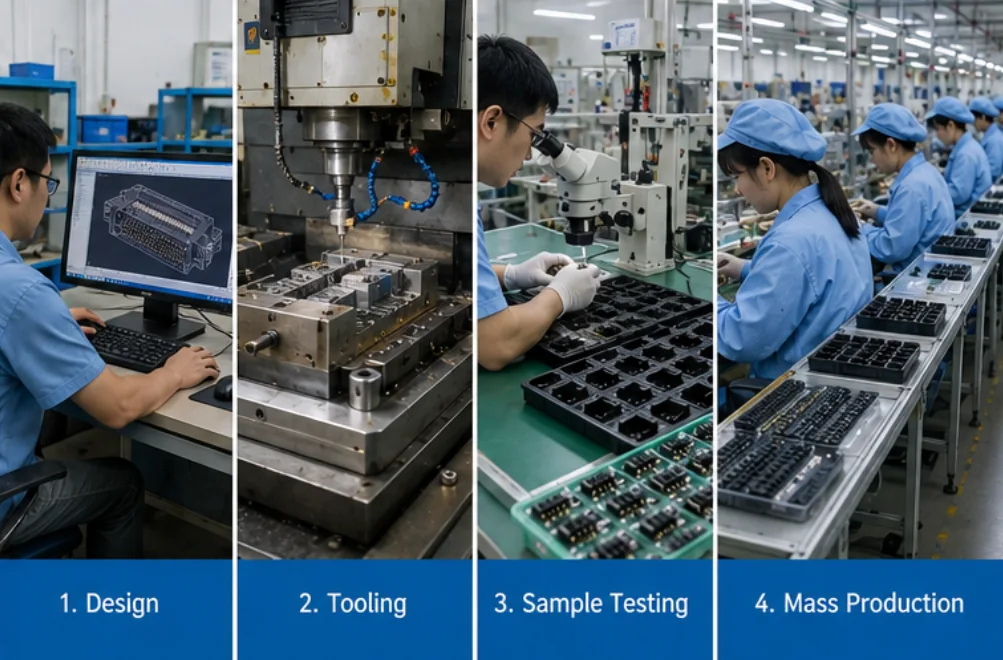
Custom connector mold development should be planned carefully from design review to sample approval. Buyers should confirm mold cost, lead time, tooling scope, material selection, sample testing and future production demand before starting the project.
If you need custom connector mold development for PCB connectors, FPC connectors, board to board connectors, wire to board connectors or Type-C connector projects, please send your drawings or samples for engineering review and quotation.
Contact UsRelated connector categories for evaluation: Floating Board To Board Connectors. Related reading: how to evaluate connector suppliers for long term production stability. More context: manufacturing and quality.