
Custom Board To Board Connector Buying Guide
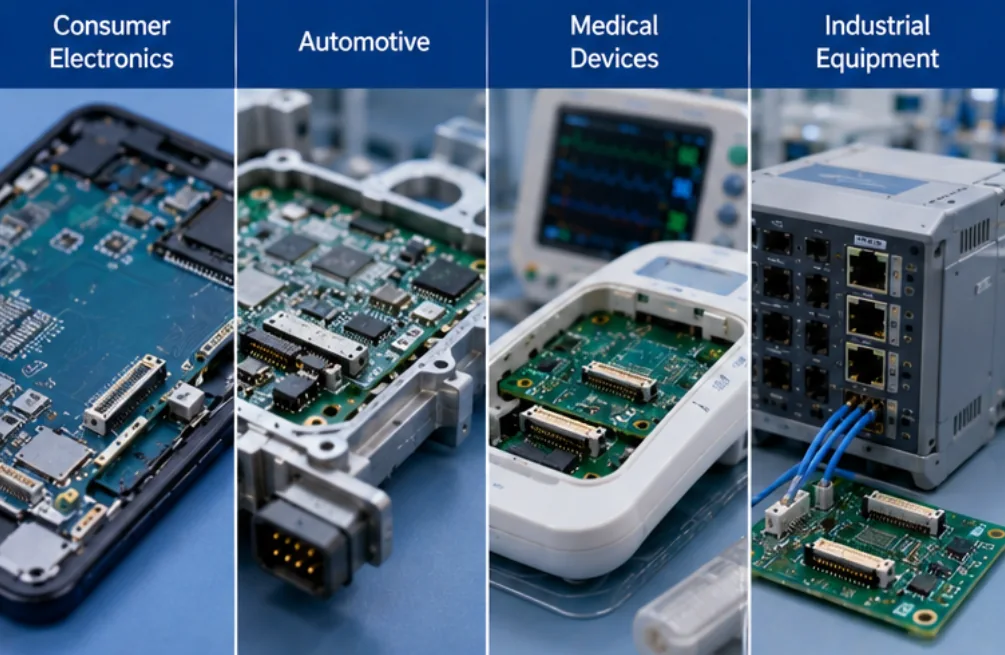
Custom board to board connectors are widely used in compact electronic devices, automotive electronics, medical equipment, communication modules and industrial control systems. Choosing the right connector requires careful evaluation of PCB structure, pitch, pin count, mating height, material, plating and production reliability.
Get Quote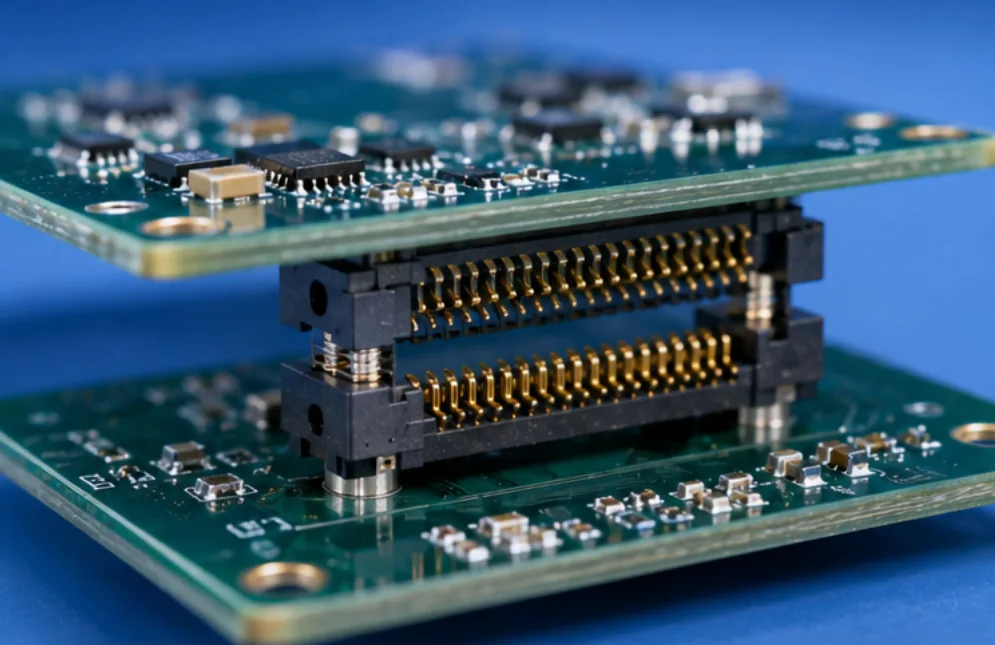
1. Confirm PCB Layout And Mating Structure
Before buying a custom board to board connector, buyers should first confirm how the two PCBs will be connected. Common structures include parallel stacking, vertical connection and right-angle connection. The connector must match the PCB layout, enclosure space and assembly method.
Important details include mating height, connector orientation, available board space and whether the product requires blind mating or alignment support. These structural details directly affect connector design and mold development.
2. Choose The Right Pitch And Pin Count
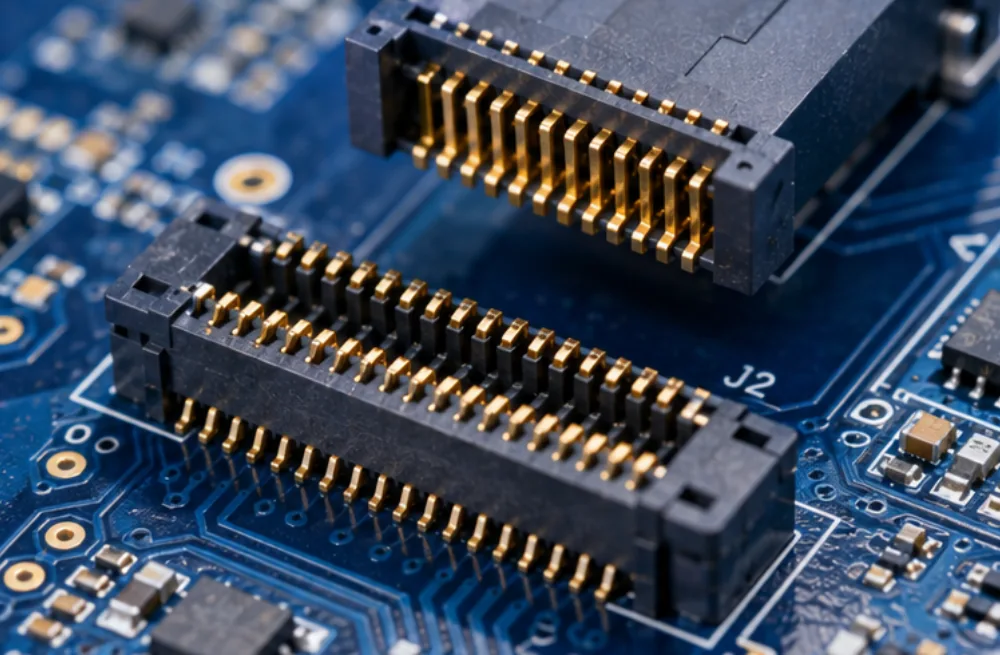
Pitch and pin count determine circuit density and PCB routing difficulty. Fine pitch board to board connectors are suitable for compact devices and high-density signal transmission, while larger pitch designs may provide stronger mechanical stability and easier assembly.
Buyers should confirm signal lines, power lines, grounding requirements and future design expansion. Choosing the wrong pitch may cause PCB redesign, unstable assembly or insufficient electrical performance.
3. Review Electrical Performance Requirements
A custom board to board connector should meet the electrical requirements of the final device. Buyers should provide current rating, voltage rating, contact resistance, insulation resistance, signal speed and shielding requirements if needed.
For high-speed signal applications, signal integrity, impedance control and contact consistency should be reviewed early. For power-related applications, temperature rise and contact reliability are more important.
4. Evaluate Material, Plating And Durability
Terminal material, housing material and plating affect connector cost and reliability. Copper alloy terminals are commonly used for conductivity and elasticity. High-temperature plastic housing may be required for SMT processing and long-term stability.
Gold plating is suitable for high-reliability signal transmission, while tin plating can be used for cost-sensitive applications. Buyers should select plating based on mating cycles, corrosion risk, current load and expected product life.
5. Check Manufacturing Capability And Quality Control
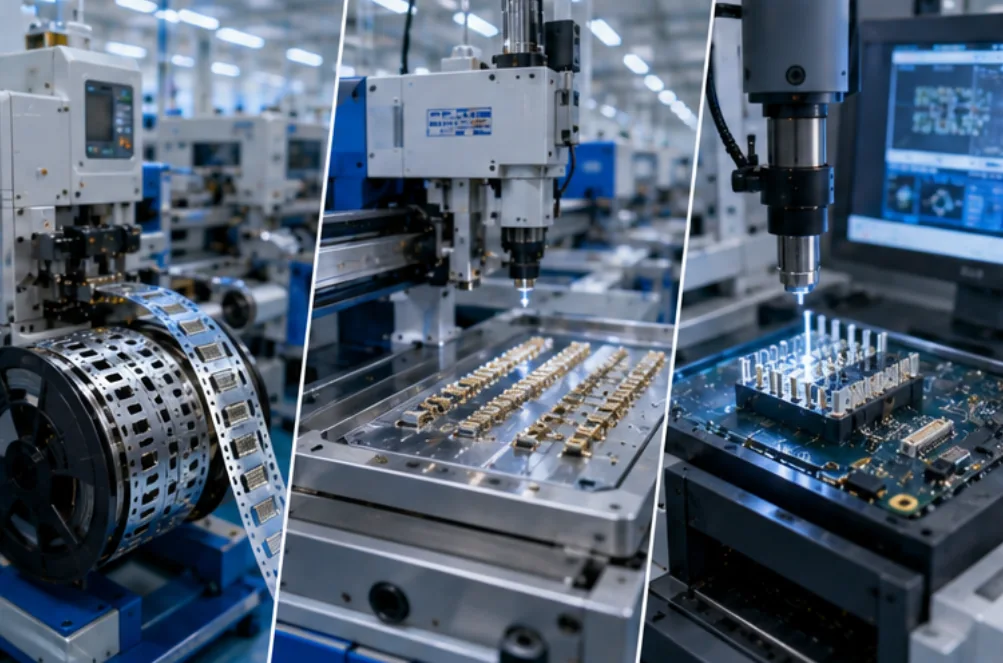
Custom board to board connectors require precision stamping, injection molding, plating control and automated assembly. A reliable manufacturer should support drawing review, prototype samples, mold development, trial production and mass production.
Buyers should also ask about dimensional inspection, contact resistance testing, insertion and withdrawal force testing, temperature cycling and batch traceability. These controls help reduce failure risk before mass production.
Custom Board To Board Connector Buying Checklist
| Item | What To Confirm | Why It Matters |
|---|---|---|
| PCB Structure | Parallel, vertical or right-angle connection | Determines connector shape and mating direction |
| Pitch And Pin Count | Circuit density, signal lines and power lines | Affects PCB layout and electrical function |
| Mating Height | Distance between two PCBs | Important for compact device structure |
| Electrical Data | Current, voltage, resistance and signal speed | Ensures safe and stable transmission |
| Material And Plating | Copper alloy, plastic housing, gold or tin plating | Affects durability and contact reliability |
| Quality Testing | Force test, resistance test, thermal cycling | Reduces mass production risk |
Conclusion
Buying custom board to board connectors requires a complete review of PCB structure, pitch, pin count, mating height, electrical requirements, material selection and manufacturing capability. A good connector design can improve product reliability, reduce assembly risk and support stable long-term production.
Related product and article resources
For procurement comparison and technical evaluation, readers can continue with these related product pages and supporting articles.
If you need custom board to board connectors or technical support for electronic device projects, please contact us with your drawings, samples or PCB design requirements.
Contact UsRelated reading: board to board connector pitch and stack height selection guide.