
What Buyers Should Check Before Ordering Custom Connectors
Custom connectors are often used when standard models cannot fully match PCB layout, product structure, signal transmission, power requirement or assembly conditions. Before placing an order, buyers should confirm technical details, material requirements, quality standards and production capability to reduce development risk.
Get Quote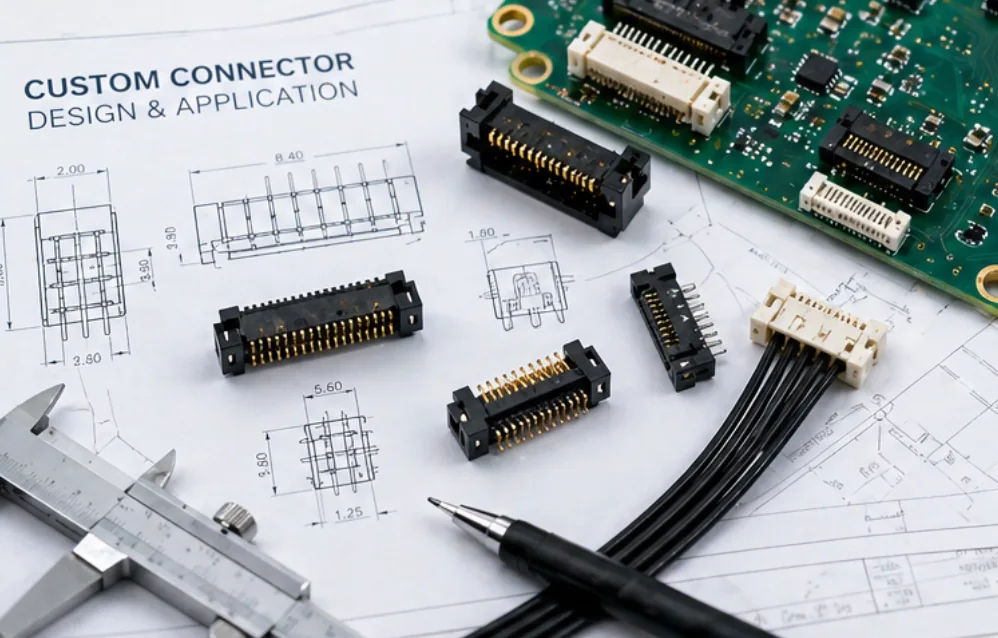
1. Confirm The Connector Application And Product Structure
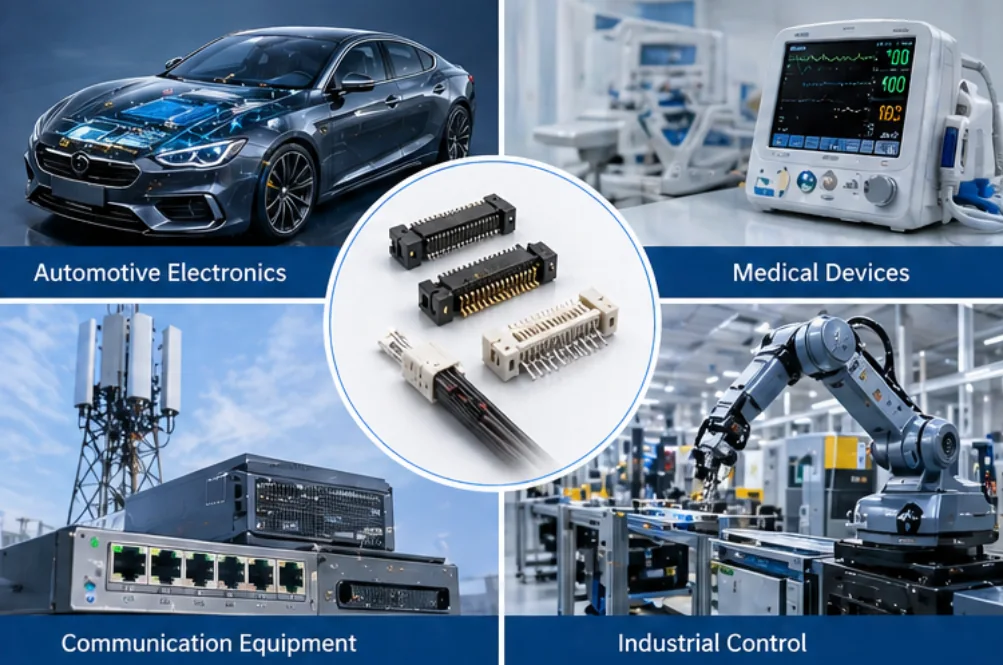
The first thing buyers should confirm is where the connector will be used. A connector for compact consumer electronics, automotive modules, medical equipment, communication devices or industrial control systems may require different structures and reliability levels.
Buyers should provide PCB layout, installation space, mating direction, connector height, pin count, pitch, locking structure and expected assembly method. These details help the manufacturer judge whether an existing platform can be modified or a fully customized mold is required.
2. Check Electrical Parameters Before Design Confirmation
Electrical performance is one of the most important factors in custom connector development. Buyers should confirm current rating, voltage rating, contact resistance, insulation resistance, dielectric strength and signal transmission requirements.
For high-speed or high-frequency applications, signal integrity, impedance control and shielding design should be considered early. For power-related applications, temperature rise and contact stability are more important. A clear electrical requirement can prevent later redesign and testing failure.
3. Evaluate Material, Plating And Environmental Conditions
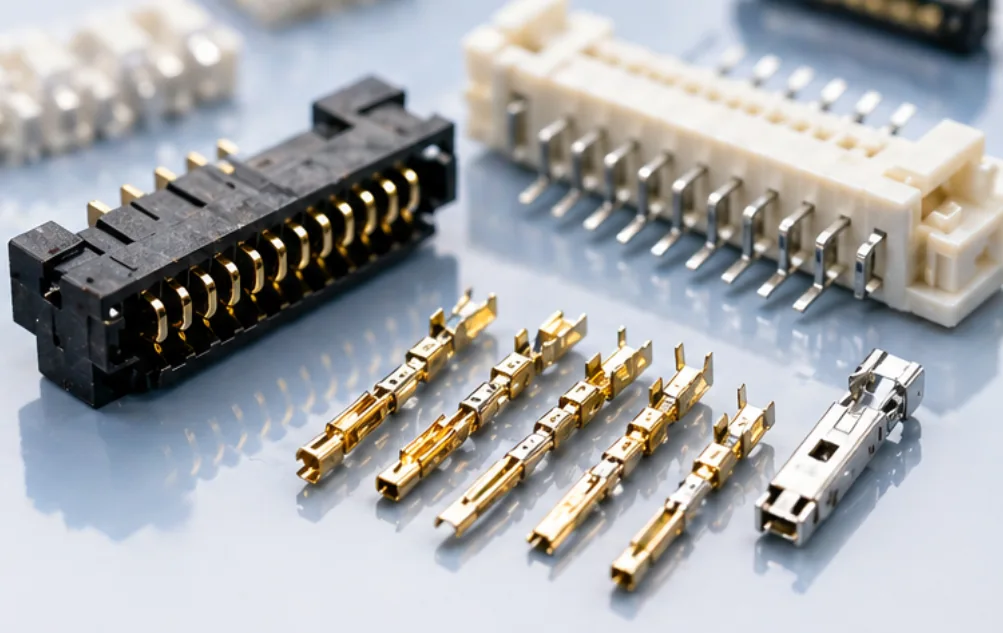
Terminal material, housing material and plating directly affect connector reliability. Copper alloy terminals are commonly used for conductivity and elastic performance. The plastic housing should provide heat resistance, insulation performance and dimensional stability during production and use.
Buyers should also confirm plating type and thickness, such as gold plating, tin plating or customized plating. If the connector will be used in humid, high-temperature, vibration or corrosive environments, corrosion resistance and long-term contact stability must be considered.
4. Review Mold, Stamping And Assembly Capability
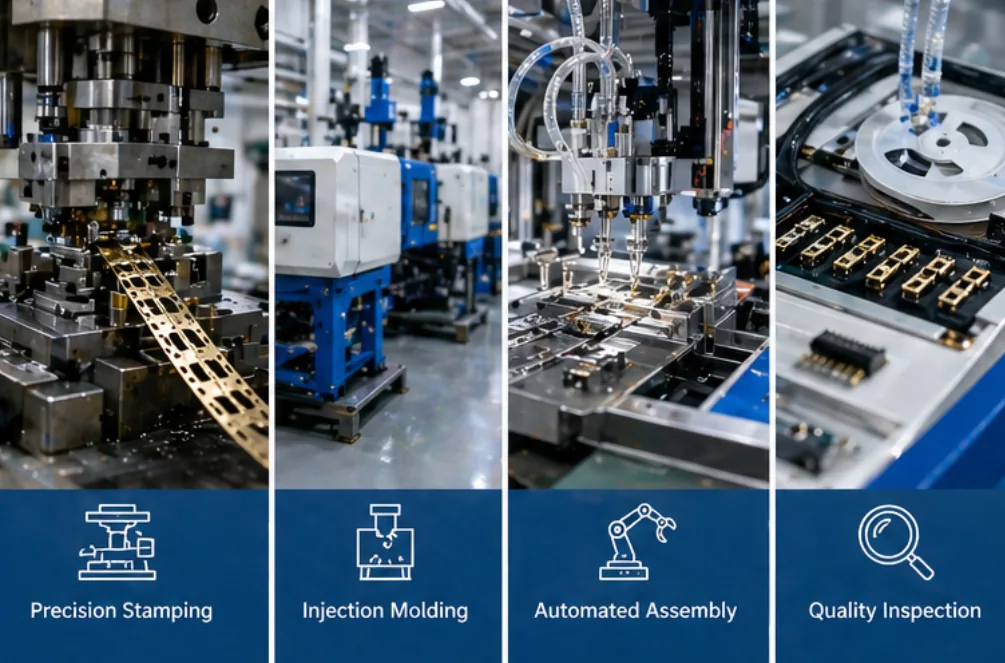
Custom connectors depend heavily on mold design, precision stamping, injection molding and automated assembly. A supplier with strong tooling and production capability can improve dimensional consistency, reduce defect rates and support stable mass production.
Buyers should check whether the manufacturer can provide design review, prototype samples, mold development, trial production, reliability testing and batch production support. For complex connectors, early engineering communication is more valuable than only comparing unit price.
5. Confirm Testing, Quality Control And Delivery Requirements
Before ordering custom connectors, buyers should ask about inspection standards and testing items. Common tests include dimensional inspection, contact resistance test, insertion and withdrawal force test, salt spray test, temperature cycling test, vibration test and solderability test.
For export projects or long-term supply, buyers should also confirm sample lead time, mold lead time, mass production capacity, packaging method, traceability system and after-sales response. These details can affect project schedule and long-term supply stability.
Custom Connector Ordering Checklist
| Item | What To Check | Why It Matters |
|---|---|---|
| Application | Industry, product structure, installation space | Determines connector design direction |
| Electrical Data | Current, voltage, resistance, signal requirement | Affects safety and transmission stability |
| Material | Terminal, housing and plating material | Affects durability and contact reliability |
| Manufacturing | Tooling, stamping, molding and assembly | Controls consistency in mass production |
| Testing | Electrical, mechanical and environmental tests | Reduces failure risk before shipment |
| Delivery | Sample time, mold time, MOQ and packaging | Affects project schedule and procurement cost |
Conclusion
Ordering custom connectors requires more than sending a drawing and asking for a price. Buyers should confirm application requirements, electrical parameters, material selection, manufacturing capability, testing standards and delivery conditions before starting development.
If you need custom connector design, board to board connectors, wire to board connectors or precision connector manufacturing support, contact us to discuss your project requirements.
Contact UsRelated connector categories for evaluation: Floating Board To Board Connectors. Related reading: how to evaluate connector suppliers for long term production stability. More context: manufacturing and quality.