
1.0mm FPC Connector Manufacturer For Industrial Display Boards
1.0mm FPC connectors are widely used in industrial display boards, HMI panels, control terminals, LCD modules and embedded electronic systems. Compared with finer pitch connectors, 1.0mm FPC connectors provide easier assembly, stronger structure and reliable signal connection for industrial applications.
Get QuoteWhy 1.0mm FPC Connectors Are Used In Industrial Display Boards
Industrial display boards often require stable connection between LCD panels, touch modules, control PCBs and signal boards. A 1.0mm FPC connector offers a practical balance between connection reliability, cable handling and PCB assembly convenience.
This connector type is commonly used in HMI panels, industrial LCD modules, control terminals, medical display equipment, POS screens, smart meters and automation devices. For these applications, long-term contact stability and strong cable retention are more important than simply reducing connector size.
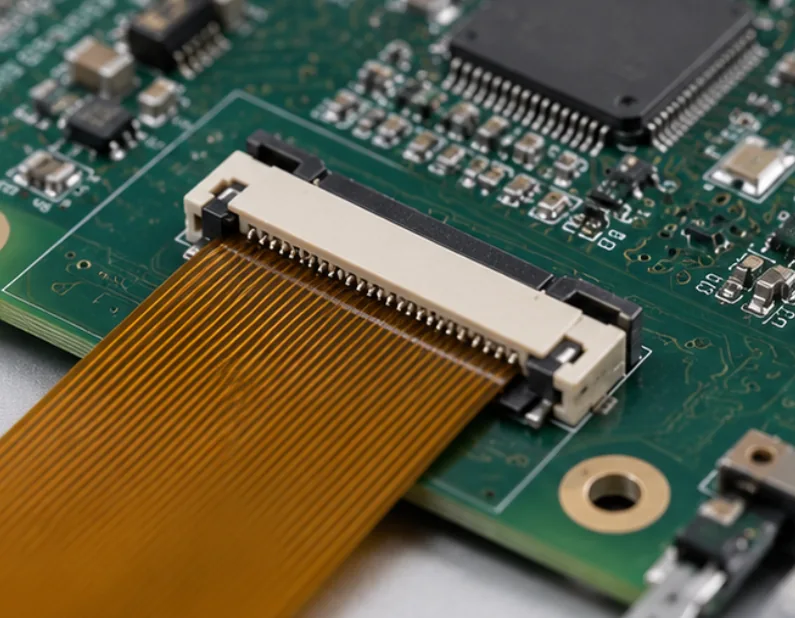
Key Specifications Buyers Should Confirm
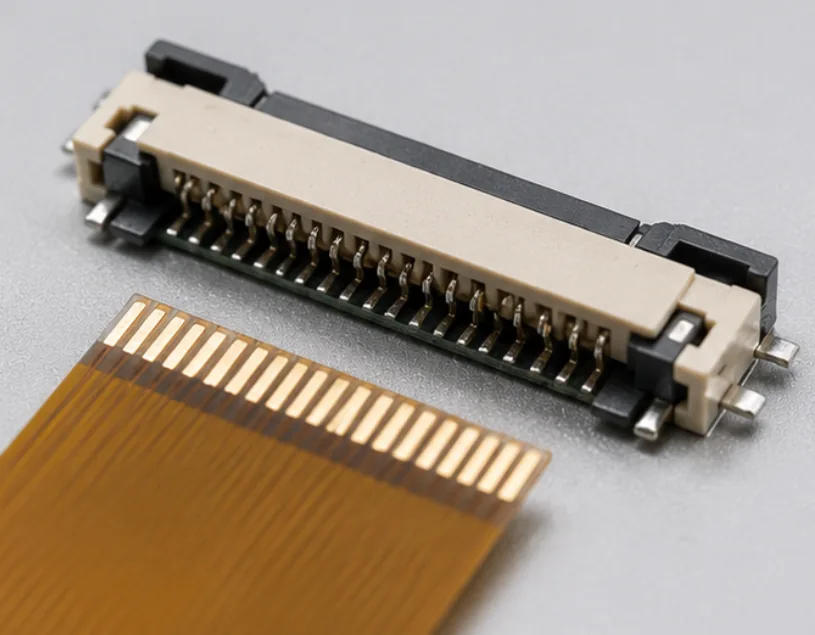
Before requesting a quotation, buyers should confirm 1.0mm pitch, pin count, contact direction, connector height, locking structure, FPC cable thickness and PCB mounting method. Common structures include top contact, bottom contact, front flip lock, back flip lock and slide lock types.
For industrial display boards, the cable route and enclosure space should be checked carefully. If the connector height or cable direction does not match the display structure, it may cause cable bending stress, assembly difficulty or unstable signal contact.
Material, Plating And Contact Reliability
A reliable 1.0mm FPC connector should use stable terminal material, accurate plastic housing and consistent plating. Copper alloy terminals provide conductivity and elasticity, while gold plating or selective plating can improve signal reliability and corrosion resistance.
Industrial display boards may work for long periods in factory environments, control cabinets or embedded systems. Buyers should pay attention to contact resistance, solderability, lock strength, terminal coplanarity and operating temperature before approving samples.
Manufacturer Capability For Industrial Display Projects
A professional 1.0mm FPC connector manufacturer should support drawing review, sample development, precision stamping, injection molding, plating control, SMT packaging and quality inspection. Stable production capability helps ensure that samples and mass production parts remain consistent.
Buyers should confirm sample lead time, MOQ, packaging method, annual capacity, inspection reports and export support. If the project requires custom pin count, connector height or special locking structure, tooling cost and sample process should be discussed early.
1.0mm FPC Connector RFQ Checklist
| Information Needed | Examples | Why It Matters |
|---|---|---|
| Pitch | 1.0mm | Confirms connector family |
| Pin Count | 10P, 20P, 30P, 40P, custom | Matches display signal requirements |
| Contact Direction | Top contact, bottom contact | Matches FPC cable design |
| Locking Structure | Front flip, back flip, slide lock | Ensures cable retention |
| Application | Industrial display, HMI panel, control terminal | Determines reliability requirements |
| Order Demand | Samples, trial order, annual volume | Helps calculate quotation and lead time |
Conclusion
1.0mm FPC connectors are suitable for industrial display boards that require stable cable connection, practical assembly and long-term reliability. Buyers should confirm pitch, pin count, contact direction, locking structure, cable thickness, plating and packaging before ordering.
If you need 1.0mm FPC connectors for industrial display boards, HMI panels or control terminals, please send your drawings, samples or specifications for quotation support.
Contact UsBuyer Focus For 1 Point 0mm FPC Connector Manufacturer For Industrial Display Boards
1 Point 0mm FPC Connector Manufacturer For Industrial Display Boards should guide engineers who need a compact connector for flat cable assemblies, camera modules, touch screens, industrial displays, and smart device PCBs. In FPC and FFC projects, a useful article should not stop at pin count or pitch. Buyers need to check cable thickness, contact direction, actuator style, insertion force, mating cycle, plating, coplanarity, packaging, and whether the supplier can keep stable quality in small sample runs and repeat orders.
Connector Selection Checklist
confirm pitch, pin count, cable thickness, contact direction, and top or bottom contact before sample matching
ask for drawings and recommended PCB footprint so the connector can be checked before layout freeze
review actuator strength, retention force, and operator handling risk for repeated assembly
confirm reel packaging, MOQ, lead time, and inspection method for pilot production
test signal continuity after cable insertion and vibration simulation if the device is portable
Sample And Acceptance Notes
For acceptance, the buyer should compare sample dimensions with the drawing, run insertion and withdrawal checks, inspect plating and terminal alignment, and test the cable assembly inside the final device housing. This is especially important when replacing an existing connector because a small difference in latch height or cable entry angle can affect assembly yield.
How Buyers Should Use This Guide
Use this article as a short engineering checklist before sending an inquiry. The goal is to connect the search keyword with a real connector selection process: identify the application, confirm the mechanical envelope, verify electrical performance, request samples, and review production support. This helps visitors move from reading a news article to browsing Weicheng product pages, factory capability, testing information, and application cases.
Related Weicheng Connector Pages
The following internal pages keep the visitor inside the same website and give search engines a clearer relationship between procurement guides, connector categories, product details, testing capability, and factory strength.
Extra RFQ Details For Faster Quotation
A serious RFQ should include product drawings, current connector model, photos of the application, PCB thickness, cable route, mating height, target operating temperature, expected annual volume, sample quantity, and the required delivery schedule. With that information, Weicheng can judge whether a standard connector series is suitable or whether the buyer should compare another pitch, stack height, locking style, or packaging method. This makes the page more useful for real buyers and helps search engines understand that the article covers connector sourcing, sample validation, engineering review, and production support.
Drawing Sample And Production Risk Notes
Before a connector project moves from inquiry to sample approval, the buyer should prepare the drawing, current part number, board layout limits, mating height, working temperature, current requirement, signal requirement, cable or PCB thickness, and the expected annual demand. This information allows Weicheng to recommend a connector family more accurately and prevents the common mistake of selecting by photo only.
During sample validation, engineers should check the connector on the real board or cable assembly. Useful checks include soldering stability, coplanarity, terminal alignment, plating quality, latch strength, insertion force, withdrawal force, contact resistance, and packaging condition after transportation. For automotive electronics, industrial control, display modules, smart home devices, and portable electronics, these details affect production yield and field reliability. Adding them to the article makes the page more useful to real procurement visitors and strengthens the internal topic relationship between connector guides, product categories, factory capability, and testing support.